What Makes Linen Trousers Different to Manufacture?
- Share
- Issue Time
- Sep 14,2026
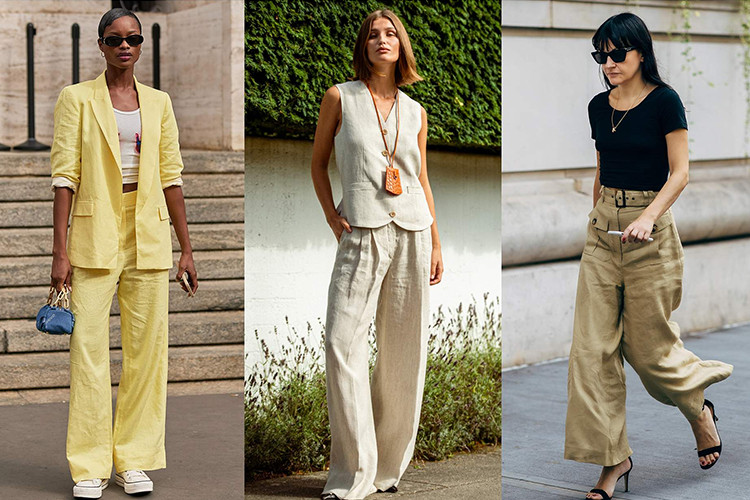
Direct Answer Linen trousers are different to manufacture because the garment has to carry load and hold a line in a fabric that is designed to move. Four things separate them from a linen top. First, drape against structure: a trouser leg is a long, narrow panel hanging under its own weight, so the cloth must be heavy enough to fall cleanly and firm enough to hold a chosen silhouette, which pushes the fabric choice into the mid to heavy range of roughly 150-260 GSM rather than the lighter weights used for shirts. Second, load-bearing construction: the waistband carries the whole garment, the fly takes repeated stress and the crotch seam is the highest-stress joint in the piece, so these points are built with interfacing, curtain and canvas support, reinforced fly facings and bar tacks rather than relying on the cloth. Third, shrinkage acts on length rather than width, so first-wash relaxation of 3-7 percent moves the finished inseam and the size chart has to be specified after the finish, not before. Fourth, crease management: linen creases where it is compressed, and a trouser is compressed at the waist, the knee and the seat, so construction and finishing - not just fabric choice - are what keep the garment presentable through a working day. None of this makes linen trousers difficult, but it does mean a trouser is a construction project with its own specification, not a shirt pattern lengthened at the leg. A trouser leg hangs under its own weight, so the fabric must have enough body to stay straight. The same light linen that flatters a shirt can collapse at the knee in a trouser, which is why bottoms are cut from the mid to heavy end of the 100-260 GSM range. The waistband carries the garment, the fly takes repeated stress and the crotch seam is the highest-stress joint. In a low-stretch woven these forces are absorbed by interfacing, reinforcement and seam type rather than by stretch, so the build matters more than the cloth. Linen relaxes and shrinks on first wash. In a top that mostly affects fit around the body; in a trouser it changes the finished inseam, so the measurement is specified after pre-shrink or the controlled wash and the approved sample must already be in its finished state. A trouser is a construction document, not a longer shirt. Waistband build, fly type, pocket anchoring, crotch seam and finished inseam decide whether the garment sells. Our guide to custom linen trousers and chinos manufacturing sets out each of those decisions in the order a factory makes them. Read in sequence, these steps explain why a trouser sample is worth measuring carefully rather than glancing at. Each stage changes a dimension or a behaviour that the next stage depends on, and a decision made by habit at step three - a waistband interlining that is too stiff, for example - cannot be corrected by anything done later. The measurements that carry the most risk are collected in our trouser manufacturing guide, and the base fabric questions are answered in the FAQ on what types of linen fabrics linen clothing manufacturers use. Table: where the manufacturing work on a linen trouser differs from a linen top. The differences are structural rather than cosmetic, which is why a bottoms programme needs its own specification and its own sample round. Figures are the unified ranges we quote (MOQ 60 pieces per style per colour, 50+ fabric specifications in stock, first-wash shrinkage 3-7 percent). You cannot inspect a trouser sample the way you inspect a shirt sample. Three of the four failure points - leg twist, finished inseam and pocket anchoring - are only visible when the garment is measured and worn, not when it is laid flat. The highest-risk item on this list is the inseam, because it is the measurement most likely to be quoted before finishing and the one that most visibly changes after washing. How the finished lengths are held within a controlled band is explained in the FAQ on how much linen shrinks and how to prevent it, and the defect standard the bulk lot is judged against is covered in our guide to linen garment quality inspection and AQL sampling. One nuance matters for planning a bottoms range: the manufacturing differences above do not lengthen any individual stage, they add work and risk. Sampling is still 7-12 days and bulk is still 25-35 days, but a trouser sample carries more decisions than a shirt sample, so it is more likely to need a correction round - and a multi-style bottoms range repeats that round per style. Budgeting one revision rather than three is realistic if the tech pack is complete. The full schedule is set out in our guide to linen clothing lead times, and the headline figure is answered in the FAQ on the average lead time for linen clothing manufacturing. Two cost-saving instincts are genuinely risky on bottoms. The first is skipping the pre-shrink or controlled wash because the sample measured correctly: the garment will still move on the customer's first wash, and because the change lands on the inseam it is far more visible than a small change in body fit. The second is lightweighting the cloth to reduce fabric cost: the trouser will hang badly, crease at the knee and read as cheap, and the fabric share of the garment cost is not the place to recover margin on a bottom. Keep the construction, manage the design. Share fabric and trims across a small bottoms capsule, reuse a proven block, keep trims standard on a first run and approve quickly - those reduce cost without touching the garment. Never remove the pre-shrink finish, the waistband support or the pocket reinforcement to close a price or time gap. The wider fibre behaviour behind that rule is covered in our guide to linen shrinkage control and the finishing options in linen fabric finishing methods. Developing a linen trouser or chino range and want the construction and cost quoted against your own specification? Send us the brief and we will set out the fabric options, the construction plan and the calendar. Source: LINENWIND linen garment manufacturing practice, Dongguan, China (ISO 9001 / OEKO-TEX Standard 100 / SEDEX; 20+ years OEM/ODM). Figures are the unified site windows: MOQ 60 pieces per style per colour, sampling 7-12 days, bulk production 25-35 days, first order 35-60 days, first-wash shrinkage 3-7 percent, 50+ fabric specifications in stock, AQL 2.5. No client cases or statistics are invented here. See also: custom linen trousers manufacturing guide · average linen clothing manufacturing lead time · linen pants and bottoms manufacturers.What Makes Linen Trousers Different to Manufacture?
The Four Manufacturing Differences
Drape vs Structure
Load-Bearing Construction
Shrinkage Moves Length
How a Linen Trouser Is Built, Step by Step
Linen Trousers vs Linen Tops: Where the Work Differs
Factor Linen Trouser Linen Top Why It Differs Fabric weight Mid to heavy, about 150-260 GSM Light to mid, often 100-180 GSM A leg must hang; a body panel drapes Load path Waistband, fly, crotch seam, pocket anchors Shoulder seams and armholes A trouser hangs from the waist, not the shoulders Grain sensitivity High - off-grain panels twist visibly Moderate - twist is less visible Long narrow panels exaggerate any error Shrinkage impact Changes finished inseam and hem break Changes body fit and length Length matters more on a hemmed leg Construction operations Many: band, fly, pockets, crotch, hem Fewer: placket, collar, cuffs More parts and more reinforcement points Crease behaviour Compressed at waist, seat and knee Compressed mainly at elbow and back A trouser is sat on and bent all day What Buyers Should Check Before Approving a Trouser Sample
Quick Facts: Linen Trouser Manufacturing
Mid to heavy weights, roughly 150-260 GSM, chosen for drape and body
7-12 days per style, realistic window 7-14 days if cloth is sourced
25-35 days from approved sample and deposit; first order 35-60 days
Run to AQL 2.5 against the approved gold sample and finished specWhat Not to Simplify on a Linen Trouser
Related Questions