Linen Silk Blend: Adding Luxury Hand Feel to Custom Linen Garments
- Share
- publisher
- LINENWIND
- Issue Time
- Sep 3,2026
Summary
Linen silk blend fabric explained for B2B buyers: what silk changes in luster, hand feel and drape, workable blend ratios (90/10 to 55/45), mulberry silk types and yarn grades (4A-6A), cost and lead time, union-dyeing and shrinkage control, wrinkle behavior and care, and how a luxury linen silk program runs at LINENWIND. MOQ 60, counter samples 7-12 days, bulk 25-35 days, first-wash shrinkage 3-7%.
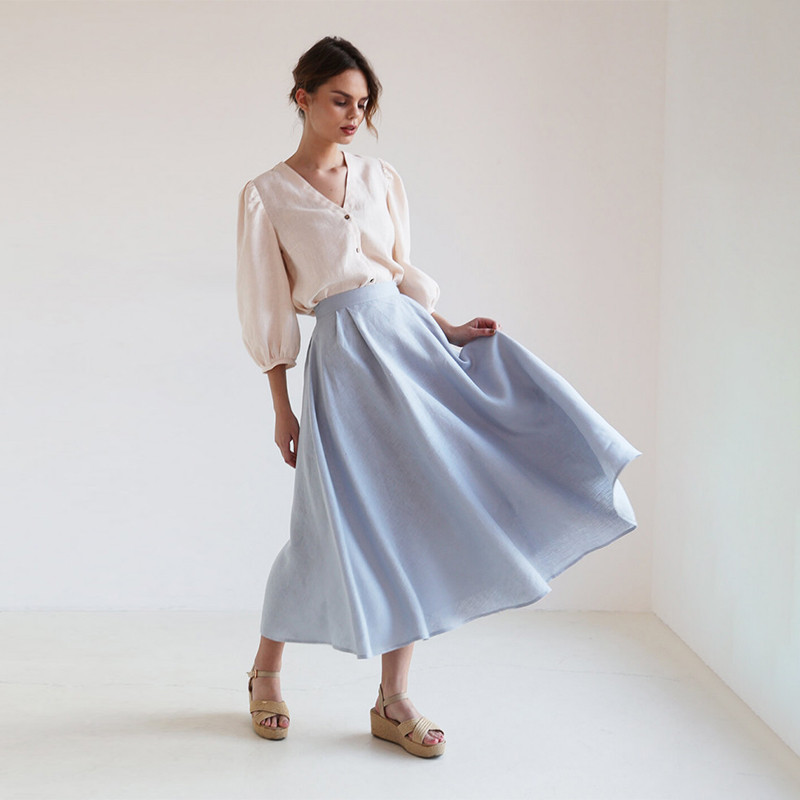
A linen silk blend is a fabric in which flax and silk are combined to add the luster, smoothness and fluid drape of silk to linen's breathable, textured character, and it is the blend most requested in the premium-line inquiries we receive at LINENWIND when a brand wants to move a capsule above its standard linen price point. For a B2B buyer sourcing custom clothing, the decisions are concrete: which silk type and grade to spec, what percentage of silk is enough to change the hand feel, what the blend adds to unit cost and lead time, and how a factory controls shrinkage and color on two fibers that dye differently. This guide answers those questions from the production side, using the same parameters we work with every day at LINENWIND, a Dongguan-based linen clothing manufacturer with 20+ years of OEM and ODM experience: MOQ 60 pieces per style per color, counter samples in 7-12 days, bulk production in 25-35 days, first orders in 35-60 days, and first-wash shrinkage of 3-7% on pre-shrunk fabric.
Silk is a protein fiber and linen is a cellulose fiber, which makes a linen silk blend technically different from the all-cellulose blends covered in our linen Tencel blend guide and our linen hemp blend guide. Tencel adds drape and softness, hemp adds strength and structure, and silk adds something neither can: a subtle luster that catches light, a smoother surface against the skin, and a softer, more elegant fall. The two components also demand different dye chemistry and different care, which is why a linen silk program needs more engineering at the sampling stage than a pure linen order, not less.
If you are evaluating linen silk for a premium capsule or a dress-and-blouse program, the sections that matter most are the ratio and yarn-grade table in Section 3, the cost and lead-time table in Section 4, and the production-challenge checklist in Section 5. They contain the specifications a factory needs to quote accurately, and they will help you avoid the two most common mistakes we see: specifying a silk percentage that is too low to feel, and assuming a linen silk garment can be washed exactly like pure linen.
What Is a Linen Silk Blend and Who Is It For?
A linen silk blend combines flax fiber with silk fiber in one fabric. In most commercial constructions the silk is present at 10-45%, with linen remaining the majority fiber so the fabric keeps its linen identity, texture and price logic. The two fibers can be combined in two ways. The first is spinning: silk staple, which is cut and spun like a short fiber, is blended with flax staple at the spinning stage into a single yarn. The second is yarn construction: a fine silk filament is wrapped around or plied with a linen yarn, which concentrates the silk on the surface where its luster and smoothness are visible and felt. Filament constructions give the most obvious sheen; spun blends give a subtler, more matte luxury hand feel at a lower cost. Both are producible in custom programs, and the choice belongs in the tech pack, not left to chance.
Who specifies linen silk? In our experience the buyers fall into three groups. First, premium womenswear brands building dress and blouse capsules priced well above their core linen range, where a 5-15% step in fabric cost is acceptable in exchange for a clearly different hand feel. Second, bridal and occasion wear lines that need the softest possible linen-adjacent fabric with an elegant drape. Third, heritage or "natural luxury" brands whose story is built on fine natural fibers; for them, silk is the natural complement to flax, and the blend reinforces the positioning rather than diluting it. For a wider view of how premium buyers evaluate linen mills, our guide to sourcing linen for luxury brands covers the supplier criteria that apply even more strictly to a silk program.
Label note: In the US, FTC fiber-content rules require any fiber present at more than 5% to appear on the label, listed in descending order by weight. The same principle applies in the EU under its textile fiber labeling rules. So a 70% linen / 30% silk fabric is labeled as such; the word "silk" on the label is itself a quality signal to the consumer, and it must match the actual composition. Confirm the blend on the tech pack and on the finished label before bulk.
It is worth stating what a linen silk blend is not. It is not a wrinkle-free fabric, and it is not a substitute for Tencel if your goal is purely softness at a moderate price. Silk's contribution is sensory and optical: luster, surface smoothness, and a more liquid drape. If those attributes support your price point, the blend is the right tool. If you simply need a softer linen, a garment wash on pure linen or a linen Tencel blend is usually the more economical route.
What Silk Changes in the Fabric: Luster, Hand Feel and Drape
Silk is the only natural filament fiber in commercial use: a single silkworm cocoon can yield a continuous filament hundreds of meters long, which is why silk yarn has a smooth, unbroken surface. Linen, like cotton and wool, is a staple fiber, and flax staples are relatively coarse, which creates linen's characteristic slub and texture. When the two meet in one fabric, three properties change in ways that are visible to the end consumer.
Luster
Silk's triangular fiber cross-section refracts light, producing the soft sheen associated with luxury textiles. In a blend, the effect ranges from a subtle glow at 10-15% silk to a clearly visible luster at 30% and above, depending on whether the silk is on the yarn surface. Undyed or softly dyed shades show the effect best; very deep, saturated colors absorb light and mask some of the sheen.
Hand Feel
Silk fiber is fine and smooth, with a soft, dry hand that feels noticeably different from flax next to the skin. Even at modest percentages, silk reduces the initial crispness of linen and adds a smoothness that reads as premium. Because silk is a protein fiber it also accepts moisture differently from flax, which contributes to a cooler first touch in warm weather.
Drape
Fine silk yarns are supple and have low bending stiffness, so they pull the fabric into a more fluid, vertical fall. A linen silk blend drapes closer to the body than pure linen of the same weight, which is why the blend is favored for bias-cut dresses, wide trousers and soft blouses where movement and line matter more than structure.
There is also a durability dimension worth understanding before you spec. Silk fiber has high tensile strength in dry conditions, comparable on a per-denier basis to many synthetics, but it is weaker when wet and can be degraded by prolonged sun exposure and by alkaline conditions. In a blend, linen provides the wet strength and abrasion resistance, which is one reason a linen silk garment is more practical than a 100% silk garment for everyday wear. The two fibers compensate for each other: silk brings luster, smoothness and drape; linen brings body, wet strength and the breathable texture that made you choose linen in the first place. Our analysis of what makes linen a luxury fabric explains why the pairing works commercially as well as technically.
Blend Ratios, Silk Types and Yarn Grades That Work in Production
There is no universal "right" linen silk ratio, because the target is a hand feel and a price point rather than a pass-fail test. The ratios below are the ones we see most often in custom programs, with the garment types they fit and the behavior a buyer should expect. A useful planning rule: below roughly 10% silk, the fiber is hard to feel and mainly appears as a subtle sheen, so if the label will say "silk," specify enough of it that the consumer can tell the difference.
| Ratio (Linen/Silk) | Typical Use | Hand Feel Result | Common GSM |
|---|---|---|---|
| 90 / 10 | Entry-level luxury shirts, light blouses | Subtle sheen, slightly smoother surface; linen character dominant | 100-140 |
| 80 / 20 | Dresses, blouses, soft shirts | Visible luster, noticeably softer hand, improved drape | 110-170 |
| 70 / 30 | Premium dresses, occasion wear, scarves | Clear silk presence; fluid drape and smooth touch | 100-160 |
| 60 / 40 or 55 / 45 | Luxury bias-cut dresses, soft tailoring | Silk-dominant character; high luster, very fluid fall | 90-150 |
Three specification points matter more than the percentage alone:
- Silk type and grade. In the trade, mulberry silk is the standard for apparel and is commonly graded 4A to 6A, with 6A the highest for filament fineness and uniformity. Filament silk (continuous, from reeling the cocoon) gives maximum luster and strength; spun silk (made from cut filament or noil) is softer and more matte and costs less. Specify which one you are buying; the two are different products with different prices.
- Yarn construction. If the sheen must be obvious, a construction that puts silk on the yarn surface delivers more luster per kilogram of silk than a random staple blend. If the goal is a subtle, matte luxury touch, a spun blend is the honest and economical choice.
- GSM and weave. Linen silk blends are usually specified in the lighter part of the weight range we work with at LINENWIND, roughly 100-180 GSM for blouses and dresses, because silk's selling points are drape and lightness. Heavier weights above 200 GSM are possible with linen-majority constructions for soft tailoring, but the silk effect becomes less obvious as weight rises.
The ratio decision interacts with your label story in the same way it does for other blends, which we discuss in detail in our linen hemp blend guide: a linen-majority blend is honestly a linen product with a silk upgrade, while a silk-majority fabric is a different product with a different care profile and a much higher price. Most brands choose linen-majority at 70/30 or 80/20, where the silk effect is clear, the label still leads with linen, and the cost increase is controlled.
Cost, Sampling and Lead Time for Linen Silk Programs
Cost is where a linen silk program separates from a standard linen order, and buyers should model it before sampling. In our cost structure for custom garments, fabric is typically 30-45% of total garment cost and labor 25-35%. Silk yarn is priced several times higher than flax yarn, so the fabric share of a silk blend sits at the top of that range, and the finished garment typically lands 20-40% above the equivalent pure linen style before retail margin. The table below summarizes the numbers you will actually see on a quote.
| Cost & Time Item | Standard Value at LINENWIND | Notes for Linen Silk |
|---|---|---|
| Fabric share of garment cost | 30-45% | Silk blend sits at the high end; driven by silk grade and percentage |
| Labor share of garment cost | 25-35% | Comparable to linen; extra care in sewing and pressing |
| Sample fee | $40-150, fully refundable | Credited to production; silk fabric swatches may carry a small material charge |
| Swatches | Free from stock linen range | Silk blend swatches subject to yarn availability |
| Counter sample | 7-12 days | Sampling window 7-14 days; allow extra round for shade approval |
| Bulk production | 25-35 days | After sample approval |
| First order, sample to delivery | 35-60 days | Includes fabric sourcing, dyeing and QC |
| Initial price quote | 48 hours / 3-7 working days | Silk program quoted after yarn and ratio confirmed |
Lead time depends almost entirely on silk yarn availability. Our stock library holds more than 50 linen specifications; silk-blend fabrics are a smaller, more specialized category, and a specific silk grade, ratio or GSM may require a yarn or mill order. When that is the case, we state the additional lead time in the quote before you commit, exactly as we do for custom hemp and specialty blends. The practical implication: confirm the silk type, grade and ratio at the brief stage, not after sampling, so yarn sourcing runs in parallel with pattern development. For a full breakdown of where money goes in a custom order, our guide to the seven cost drivers in custom linen explains the structure that applies to every program, including premium blends.
Sampling is not optional for a silk program. Two counter samples are standard practice: one in your production ratio and one in a comparison ratio, so the hand feel and luster can be judged on your actual pattern. Each sample fee is fully credited to production, and the extra round typically costs only time, because the discipline catches problems before bulk. This is the same sampling logic we use for every blend, and it is the step that separates a successful premium launch from a costly rework.
Production Challenges: Shrinkage, Colorfastness and Sewing a Two-Fiber Fabric
A linen silk blend is technically more demanding than pure linen in three areas, and a buyer should hear how the factory handles each one before signing off. These are the questions we recommend asking every supplier; they are also the points where an inexperienced factory will produce a disappointing result.
- Shrinkage control. Both fibers shrink in wet processing, and they do not shrink identically. At LINENWIND we quote a first-wash shrinkage range of 3-7% for linen and linen-blend fabrics, and we pre-shrink through finishing so the range is consistent and the pattern is cut with the correct allowance. For a silk blend, the counter sample is the moment to verify the actual number, because a silk component can change the relaxation behavior of the fabric. Never assume the blend behaves like the pure linen style beside it in your range.
- Union dyeing and color consistency. Linen is a cellulose fiber and dyes with reactive or vat dyes; silk is a protein fiber and dyes with acid dyes. A solid shade across a two-fiber fabric requires union dyeing, in which both fiber types are colored in a controlled sequence or with adjusted recipes so they read as one color rather than two. Poorly controlled dye lots show a subtle two-tone effect, which is why shade approval against the lab dip is non-negotiable for silk blends, and why we inspect every batch against the approved sample. For the mechanics of how cellulose blends behave in the dyehouse, our linen rayon blend shrink guide covers the wet-processing side in detail.
- Sewing, pressing and finishing. Silk is delicate and heat- and friction-sensitive compared with flax. Sewing a blend calls for fine needles, controlled stitch density and careful handling at the needle plate to avoid snagging; pressing requires lower temperatures and press cloths to protect the silk from shine marks. A factory that sews pure linen well is not automatically equipped for a silk blend, so confirm experience at the sampling stage. Finishing is where the hand feel is decided: a gentle garment wash softens the fabric, while a light calendering can enhance luster, and the choice should match the hand you are selling.
Factory note: In our production experience, the two failures buyers report most often with linen silk are unexpected shrinkage on a washed style and a shade that shifts between the lab dip and bulk. Both are preventable with the same discipline: pre-test on the counter sample, approve the lab dip in the production ratio, and hold the finishing parameters fixed between sample and bulk. A silk program is not difficult; it is simply less forgiving, which is exactly why the sampling phase matters more, not less.
Colorfastness deserves one extra line because it is where silk's chemistry shows up at retail. Silk has good fastness to properly controlled acid dyeing, but it is sensitive to alkaline conditions, including many household detergents. A silk blend garment that is labeled machine washable must be finished and tested for that reality, and the care label must match what testing proves. If you plan to sell the garment as dry-clean only, say so at the brief stage; that decision changes finishing and labeling, and it shapes the consumer's expectation from the start.
Care, Wrinkle Behavior and Labeling for Linen Silk Garments
Care is the subject buyers ask about most once a linen silk program is real, because the two fibers have different habits. The short version, which we also answer in detail in today's companion FAQ on whether linen silk blend wrinkles: a linen silk blend wrinkles less than 100% linen, because silk fiber has better elastic recovery and a smoother surface that resists sharp creasing, but it is not wrinkle-free, and creases that do form tend to drop out quickly with steam or a low-heat iron. If wrinkle management matters to your brand story, finishing and blend ratio do more than any care promise, and our expert guide to unwrinkling linen covers the garment-level methods that apply to blends as well.
- Washing. For linen-majority blends, gentle machine washing in cold water with a mild, silk-safe detergent is possible when the fabric is pre-shrunk and the garment is finished for it; for silk-majority or filament-silk styles, dry cleaning or hand washing in cold water is the safer label. The care label must follow the most delicate fiber and must be verified by testing.
- Drying. Line dry away from direct sun, which can weaken silk over time. Do not tumble dry a silk blend on high heat; low or no heat only if the label allows it.
- Ironing. Iron on the silk side of the temperature range, typically low to medium, ideally with a press cloth, while the fabric is slightly damp. High heat can mark silk with a permanent shine.
- Storing. Store finished garments away from prolonged direct light and handle strong perspiration or cosmetic contact, which can affect silk, with normal garment care.
Because care labels for blends must reconcile two fibers, the wording deserves care of its own. We cover FTC care-label requirements and the specific instructions for linen in our September guide to care labels and branding; the same rules apply here, with silk added to the composition line and the care symbols adjusted to the more delicate fiber. If your market is the US, plan the label content at the tech pack stage so the finished label matches the tested garment.
Durability in daily wear is actually a strength of the blend rather than a compromise: linen gives the fabric wet strength and abrasion resistance, while silk contributes the smoothness that reduces pilling and surface wear in high-friction areas. In our experience a well-made linen silk garment wears longer than a 100% silk garment of similar weight, which is a genuine selling point for the retail buyer who has been burned by delicate pure-silk pieces. Our guide to linen garment lifespan explains the factors that determine how long a natural-fiber garment lasts, including fabric quality, construction and care.
How We Produce a Luxury Linen Silk Program at LINENWIND
LINENWIND is a Dongguan-based linen garment factory specializing in OEM, ODM and private-label programs, with more than 20 years of continuous operation. A linen silk program runs through the same disciplined sequence as our pure linen production, with three extra checkpoints: silk sourcing, union-dye shade approval, and silk-safe sewing and pressing parameters. For buyers building premium collections, our guide to choosing a manufacturer for luxury linen programs describes the supplier capabilities we believe every premium brand should verify.
1. Brief and Quote
Send your tech pack with the target ratio, silk type and grade, GSM and garment type. You receive an initial response within 48 hours and a detailed quote within 3-7 working days, including silk yarn options, any mill-order lead time, and the fabric share of cost.
2. Counter Samples
Counter samples are produced in 7-12 days (sampling window 7-14 days), with sample fees of $40-150 fully credited to production. Shrinkage, union-dye shade, hand feel and seam behavior are all verified here, usually across two candidate ratios.
3. Bulk Production
Bulk runs 25-35 days after sample approval, with a minimum order quantity of 60 pieces per style per color. First orders complete in 35-60 days from sample approval to shipment, including fabric sourcing, dyeing and QC.
4. Quality Control
Production is controlled to AQL 2.5 sampling standards, with inline and final inspections covering shade, stitching, shrinkage and trims. ISO 9001, OEKO-TEX Standard 100 and SEDEX documentation is available on request.
The three extra checkpoints are straightforward to explain to a buyer. Silk sourcing means confirming the mulberry silk origin, grade and type at the quote stage and attaching documentation where required, so nothing blocks the shipment later. Union-dye shade approval means approving a lab dip in the production ratio before bulk, then checking every batch against it. Silk-safe parameters mean fine needles, controlled stitch density, low-temperature pressing and careful finishing, all confirmed during sampling. Each checkpoint is standard practice in our production system, and each is reflected in the quote you receive before ordering.
For brands that already run pure linen programs and want to test the premium tier without a full commitment, the practical route is a small capsule: two to four styles in one or two linen silk ratios, with counter samples first. The MOQ of 60 pieces per style per color keeps the test affordable, the sampling cost is credited to production, and the data from that capsule, real shrinkage numbers, real shade approval, real consumer feedback, is exactly what you need to plan the full season. Our linen Tencel blend guide and linen hemp blend guide cover the other two blend families in the same framework, so you can compare all three against your price points and brand story.
Frequently Asked Questions
What is a linen silk blend?
A linen silk blend is a woven fabric combining flax and silk, usually with linen as the majority fiber at 55-90%. Silk adds luster, surface smoothness and fluid drape while linen keeps the breathable texture, body and wet strength. Silk is blended as spun staple at the spinning stage or wrapped around linen yarn as filament; the construction choice determines how visible the silk effect is.
What percentage of silk is needed to feel the difference?
Roughly 10% silk produces a subtle sheen that many consumers cannot name, 20% gives a clearly visible luster and a softer hand, and 30% or more makes the silk presence obvious in both look and touch. If the label will say "silk," specify enough that the difference is real; 80/20 and 70/30 linen silk are the most common commercial choices.
Is linen silk blend fabric expensive?
Yes, relative to pure linen. Silk yarn is priced several times higher than flax, so the fabric share of garment cost, normally 30-45% at LINENWIND, sits at the high end of that range for a silk blend. A finished style typically lands 20-40% above the equivalent pure linen garment before retail margin, depending on silk percentage, grade and construction.
Does linen silk blend shrink?
Yes, and the two fibers do not shrink identically, which is why pre-shrinking and testing matter. At LINENWIND we quote a first-wash shrinkage range of 3-7% and verify the actual number on the counter sample before bulk, cutting patterns with the correct allowance. Never assume a silk blend matches the shrink behavior of the pure linen style beside it.
Does linen silk blend wrinkle less than pure linen?
Generally yes. Silk fiber has better elastic recovery and a smoother surface than flax, so a linen silk blend creases less sharply than 100% linen and wrinkles tend to drop out more quickly with steam or gentle ironing. It is not wrinkle-free; blend ratio, weave and finishing all influence the result, and the garment still needs the care its label describes.
How should linen silk garments be washed?
Linen-majority blends can be machine washed cold on a gentle cycle with a mild, silk-safe detergent when the fabric is pre-shrunk and finished for it. Silk-majority or filament-silk styles should be dry cleaned or hand washed in cold water. Line dry away from direct sun and iron low to medium with a press cloth; the care label must follow the more delicate fiber.
Can I order a linen silk program at low volume?
Yes. At LINENWIND the MOQ is 60 pieces per style per color, the same as for pure linen, which makes a small luxury capsule feasible. Counter samples take 7-12 days with fees of $40-150 fully credited to production, bulk runs 25-35 days, and first orders complete in 35-60 days including silk sourcing, union dyeing and QC.
How is a linen silk blend dyed without two-tone color?
Through union dyeing, where the cellulose linen and the protein silk are colored in a controlled sequence or with adjusted recipes so both read as one shade. Shade approval against a lab dip in the production ratio is essential, and every bulk batch should be inspected against the approved sample, which is standard practice in our production system.
The linen silk blend is a premium positioning tool that changes how a fabric looks, feels, drapes and can be labeled. Start with the ratio and silk type, model the cost before sampling, approve the union-dye shade, verify shrinkage on the counter sample, and set the care label to the more delicate fiber, and the blend will perform predictably from factory to retail. If you would like a quote against your tech pack, our team responds within 48 hours and can review silk options and stock fabrics from our library, including how Tencel blends compare for softness at a lower cost, how long natural-fiber garments last, and what luxury sourcing really requires. Start the conversation through our contact page or send an inquiry.