Why Custom Linen Clothing Costs What It Costs: 7 Cost Drivers Every Fashion Brand Should Know
- Share
- publisher
- LINENWIND
- Issue Time
- Aug 28,2026
Summary
Custom linen clothing from a Chinese manufacturer typically costs $8-35+ per piece, driven by seven measurable factors: fabric grade and origin (30-45% of cost), design complexity and SMV labor (25-35%), MOQ and volume, finishing, trims, QC, and sampling. This guide explains each driver with real numbers, how to read and compare quotations (EXW vs FOB), a worked example, a cost-optimization checklist, and Linenwind's pricing practice (MOQ 60, sampling 7-14 days, bulk 25-35 days).
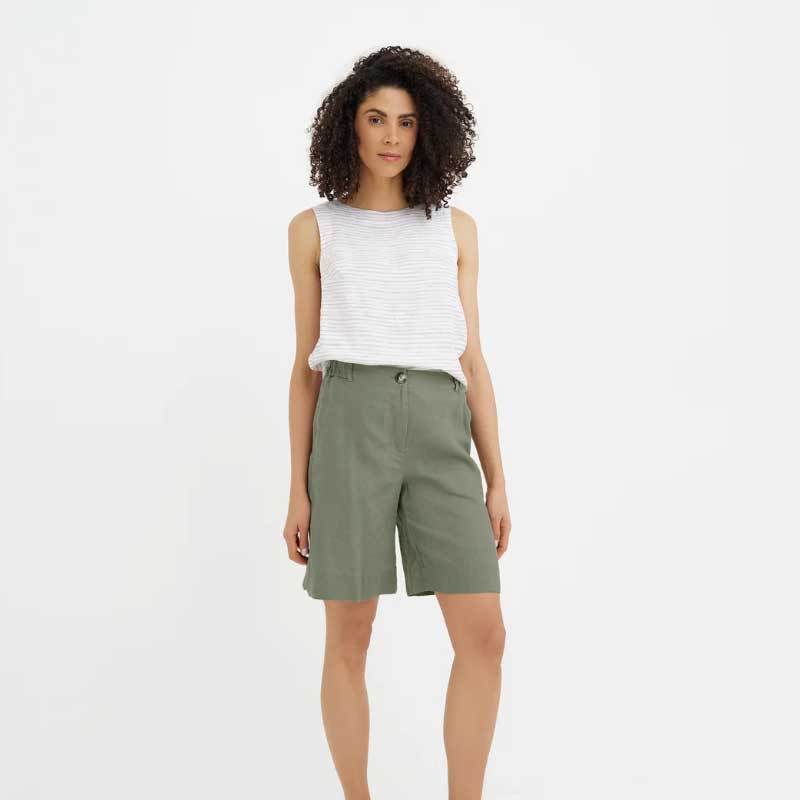
Custom linen clothing from a Chinese manufacturer typically costs $8–$35+ per piece at the factory gate, and that number is not random. It is the sum of seven measurable cost drivers: fabric grade and origin, design complexity and SMV, order quantity, finishing and pre-shrinkage, trims and branding, quality control and compliance, and sampling and development. This guide explains each driver with real numbers, shows you how to read a quotation so you can compare offers fairly, and closes with the first-party pricing practices Linenwind uses on real orders. If you have already read our linen clothing manufacturing cost guide, you know the price range. What this guide adds is the why: which line items move your unit price, by how much, and what you can change as a buyer. We are Linenwind, a linen clothing manufacturer in Dongguan, Guangdong, China, with more than 20 years of experience making linen garments for brands in the US and Europe. Our standard MOQ is 60 pieces per style, sampling takes 7–14 days, and bulk production runs 25–35 days. The numbers below are the ones we actually quote on. Every custom linen garment has a cost structure that looks roughly like this. Percentages shift with style and fabric, but the order of magnitude is stable across mid-size Chinese linen factories. Fabric is usually the single largest line, which is why linen fabric pricing matters more than any other input. Labor is second, and it is driven by a number called SMV that most first-time buyers have never heard of. Read on. Linen fabric is priced by fibre quality, origin, weight and finishing, and the spread is wide. Standard short-fibre linen sits around $4–$8 per meter, mid-range 100% linen usually runs $8–$18, and European or certified organic linen can reach $15–$30+ per meter. A dress that consumes 2.5 meters of fabric therefore has a raw-material cost anywhere from $10 to $75 before a single seam is sewn. Three fabric specifications move the number the most: Buyer tip: ask your manufacturer to quote fabric by type, GSM and origin on the quotation. If the quote only says "linen," you cannot compare it with anything. SMV (Standard Minute Value) is the number of minutes a trained operator needs to complete one garment at standard efficiency. It is the backbone of labor costing in garment manufacturing: labor cost = SMV × minute rate × efficiency adjustment. The more construction steps a style has, the higher the SMV, and the higher your unit price. In linen specifically, SMV tends to run higher than in cotton or synthetic garments because the fabric is slippery, frays easily, and needs careful handling at cutting and sewing. A simple relaxed top might carry 15–25 SMV, while a lined dress with pleats, a waistband and buttons can carry 40–60 SMV. That difference alone can move unit price by several dollars. Design choices that raise SMV and therefore price: Factory view: when a buyer asks us to reduce cost, we start with the spec sheet, not the price. Simplifying one construction detail often saves more than negotiating a dollar per piece. Fixed costs — fabric preparation, pattern and grading, line setup, cutting markers, trim procurement — are spread across the pieces in your order. A 60-piece run carries those setup costs on 60 units; a 1,000-piece run carries them on 1,000 units. That is why per-piece price falls as volume rises, and why MOQ tiers exist in the first place. In the Chinese linen market, four tiers are common: At Linenwind we hold our base MOQ at 60 pieces per style per color — low enough for a first collection, high enough to keep unit pricing realistic. If your brand is deciding how many styles to order, our wholesale buying guide walks through order structure and per-unit trade-offs. Linen shrinks and relaxes in the first wash, so responsible production includes pre-treatment and garment washing. We control first-wash shrinkage to 3–7% through pre-shrunk fabric, washing programs and measured specs. Every one of those steps costs money, and the finishing menu is a real line on the quotation: Washed and finished linen is a major part of the modern linen look, which is why we wrote a separate buyer's guide to linen finishes. The short version: each finish adds cost but also adds perceived value — decide which your price point can support. Trims are the quiet driver that appears in every quote but rarely gets negotiated. Custom woven labels, printed care labels, hangtags, buttons, zippers, drawcords, branded polybags and inserts all add per-piece cost. A premium branded package with custom hangtags and tissue can add $0.50–$2.00 per unit versus plain packaging. Two practical rules: Quality systems are part of the price, and they are worth paying for. A factory that runs AQL 2.5 inspection, shrinkage and colorfastness testing, and holds ISO 9001, OEKO-TEX Standard 100 and SEDEX certifications carries real compliance overhead — and it is the difference between a sellable order and a returns disaster. See our cost breakdown guide for how QC sits inside the total. Testing items that can appear on your quote: If you are comparing two factories, ask what is included in the unit price versus what is billed separately. Testing is where hidden charges hide. Development cost is real even though it is often refundable. At Linenwind, fabric swatches are free (up to 10 pieces), existing-style samples run $40–$80, and custom pre-production counter samples run $60–$150 per piece. Sampling fees are fully credited back on your first bulk order of the same style, so the net development cost for an order that moves to production is close to zero. Sample lead time is 7–12 days from a confirmed tech pack, and the whole development-to-delivery timeline is 35–60 days for first orders. If you are planning a launch date, our brand launch guide includes a production calendar. The cheapest way to reduce development cost is to send a complete tech pack. Every round of clarification and re-sampling adds days and dollars. A comparable quotation states the trade term, the fabric spec, and the price basis. The single most common mistake brands make is comparing an EXW price with a FOB price, or a plain-fabric price with a washed-and-finished price, and concluding one factory is cheaper. Before comparing two quotes, check that both include: Transparent manufacturers break these out by line. Our FAQ on transparent pricing shows what a good breakdown looks like, and how unit pricing is calculated explains the math behind the lines. The quality of your quotation depends directly on the quality of your brief. A complete inquiry package contains: your tech pack or spec sheet with measurements and grading; fabric preference (type, GSM, origin) or a request for the factory's stock linen options; trim and label requirements; target quantity per style and color; and any certification or testing requirements. With that package, a factory can quote precisely in one round instead of three. Our FAQ on what to prepare before an inquiry lists the full set, item by item. Imagine a linen midi dress quoted at $16.00 and $13.50 per piece. The first quote is FOB with 100% European linen, washed and pre-shrunk, custom woven labels, AQL 2.5 inspection included, sampling credited back. The second is EXW with unlabelled "linen blend" fabric, no washing spec, basic packaging, and testing billed separately at $2.20 per piece plus freight to the port. Rebuilt on the same scope, the second quote is actually $16.70 — the "cheaper" supplier is 4% more expensive. This is the single most common trap in linen sourcing, and it is why comparing line items matters more than comparing the headline number. For reference on the market side of the comparison, our China vs India cost comparison and manufacturer guide cover how country and factory type shift the same seven drivers, and the per-piece pricing FAQ gives current bulk-order reference ranges. To make the drivers concrete, here are the bulk-order price bands we actually see for common linen categories in Chinese factories. These are FOB-style factory prices including fabric, labor, washing, finishing and basic packaging — before freight, duties and any rush fees. Two things to notice. First, the gap between basic and premium is driven mostly by fabric origin and finishing, not by labor — the same sewing line makes both. Second, the range within a category is where your design choices land: a simple shift dress sits at the bottom, a lined, pleated, embroidered dress sits at the top. When a manufacturer asks for your tech pack before quoting, this is why. Unit price is not total cost. First-time buyers regularly underestimate these five items: Budget rule of thumb: add 8–15% on top of the FOB unit price for freight, duties, testing and buffer on your first order. That is the number to compare against your retail plan, not the raw unit price. If your target unit price is fixed, work through this checklist in order — each step attacks a different driver: Our FAQ on reducing costs with linen manufacturers covers the same ground at question depth, and the wholesale buying guide shows how these levers fit into a full order. To make this concrete, here is how we quote on real orders: If you are early in the process, send us your sketches or spec sheet through the inquiry form and you will get a realistic range, not a marketing number. Ready-made garments are produced in very large batches from standardized patterns, so setup costs are tiny per unit. Custom linen production creates a pattern, grades it, sources your specific fabric and trims, and runs a dedicated line at a lower volume — each step adds per-unit cost. The premium buys fit control, fabric choice and brand identity. Fabric and design complexity. Switching from European to standard 100% linen can cut the material line by 30–50%, and simplifying one construction detail lowers SMV immediately. Volume is the third lever — see how brands reduce costs for the full playbook. Because every order is made-to-order from scratch: different fabric, pattern, trims and quantity change the unit price. This is standard for custom clothing manufacturers. The more complete your spec sheet, the more precise the quote. At Linenwind, yes — custom pre-production sample fees are fully credited back on your first bulk order of the same style. Swatches are free. This is the norm at serious custom factories, so it is worth asking for in writing before you commit. EXW (Ex Works) means the price covers the goods at the factory gate — you arrange and pay all freight, customs and insurance. FOB (Free On Board) includes delivery to the port of loading and loading onto the vessel. Always compare quotes on the same trade term. A well-prepared inquiry gets a preliminary price range within 24–48 hours. A detailed itemized quotation with fabric sourcing and sampling estimates usually follows within 3–7 working days. Complex projects with custom fabric can take 5–10 days. See our quotation timeline FAQ for the full stages. Yes — setup costs are fixed, so doubling volume can reduce per-unit price by 5–15%, and moving from 60 to 1,000 pieces per style can reduce it further. The MOQ pricing FAQ shows how the tiers move the number. No. Compare on identical scope first: same trade term, fabric spec, trims, QC and testing. A cheaper quote that excludes testing or uses lower-grade fabric is not cheaper. The cheapest quotation is often the most expensive order — see transparent pricing for what a fair quote should include. Seven drivers explain the price of every custom linen garment: fabric, SMV/labor, volume, finishing, trims, QC and development. Once you can see them on a quotation, you can compare factories fairly, negotiate on substance rather than hope, and design your collection with the cost structure in mind from day one. Need a real number for your specific style? Read our full cost breakdown or the manufacturing cost guide, then send your spec sheet to Linenwind for a line-item quotation within 48 hours. One final note on negotiation: the most productive conversation you can have with a manufacturer is not "can you go lower" but "here is my target price — which specification changes get us there." Because every cost driver is visible on the quotation, you can trade fabric grade, construction, volume and trims against price in a way that protects quality and margin at the same time. That is how cost becomes a design tool instead of a surprise.Why Custom Linen Clothing Costs What It Costs: 7 Cost Drivers Every Fashion Brand Should Know
The Short Answer: Where Your Unit Price Comes From
Cost Component Typical Share What It Covers Fabric and raw material 30–45% Linen cloth, dyeing or finishing at mill level, shrinkage pre-treatment Labor (SMV-based) 25–35% Cutting, sewing, washing, ironing, trimming, packing Trims and accessories 5–15% Buttons, zippers, labels, hangtags, thread, interfacing QC, testing and overhead 5–12% AQL inspection, shrinkage/colorfastness tests, line setup, admin Packaging and cartons 2–6% Polybags, cartons, inserts, barcode stickers Cost Driver #1: Fabric Grade, Origin and Weight
Cost Driver #2: Design Complexity and SMV
Cost Driver #3: MOQ and Order Volume
Tier Typical MOQ (pcs/style/color) Best For Ultra-low 10–50 Startups, sampling, capsule tests Low 50–200 Emerging brands, DTC labels, Linenwind base MOQ 60 Medium 200–1,000 Growing brands, seasonal collections High 1,000+ Large retailers, department stores Cost Driver #4: Finishing, Washing and Pre-Shrinkage
Cost Driver #5: Trims, Branding and Packaging
Cost Driver #6: Quality Control, Testing and Compliance
Cost Driver #7: Sampling and Development
How to Read a Quotation and Compare Offers Fairly
What to Send With Your Inquiry for a Faster, More Accurate Quote
Worked Example: Comparing Two Quotes for the Same Dress
Real Cost Examples by Garment Type
Garment Category Basic / Standard Quality Premium / European Linen Why It Differs Linen tops / shirts $8–$15 $16–$20 Low fabric consumption, simpler SMV Linen dresses $12–$22 $23–$35 1.8–3.0 m fabric, more sewing steps Linen pants / bottoms $10–$18 $19–$28 Waistband, fly, hem operations Linen two-piece sets $18–$28 $29–$45 Two garments, shared grading but double sewing Linen shorts / skirts $7–$14 $15–$22 Lowest fabric use and SMV Hidden Costs Buyers Often Miss
A Cost-Optimization Checklist for Your First Run
How Linenwind Structures Its Pricing
Frequently Asked Questions
Why is my custom linen quote higher than a ready-made garment?
Which cost driver should I attack first to reduce price?
Why can't you give me a fixed price list?
Are sampling fees really refundable?
What is the difference between EXW and FOB on a quotation?
How long does a quotation take to arrive?
Does MOQ really change the per-piece price by much?
Should I always choose the cheapest quote?
Bottom Line: Cost Is Understandable, Not Random