What Makes a Professional Linen Manufacturer Different?
- Share
- Issue Time
- Aug 31,2026
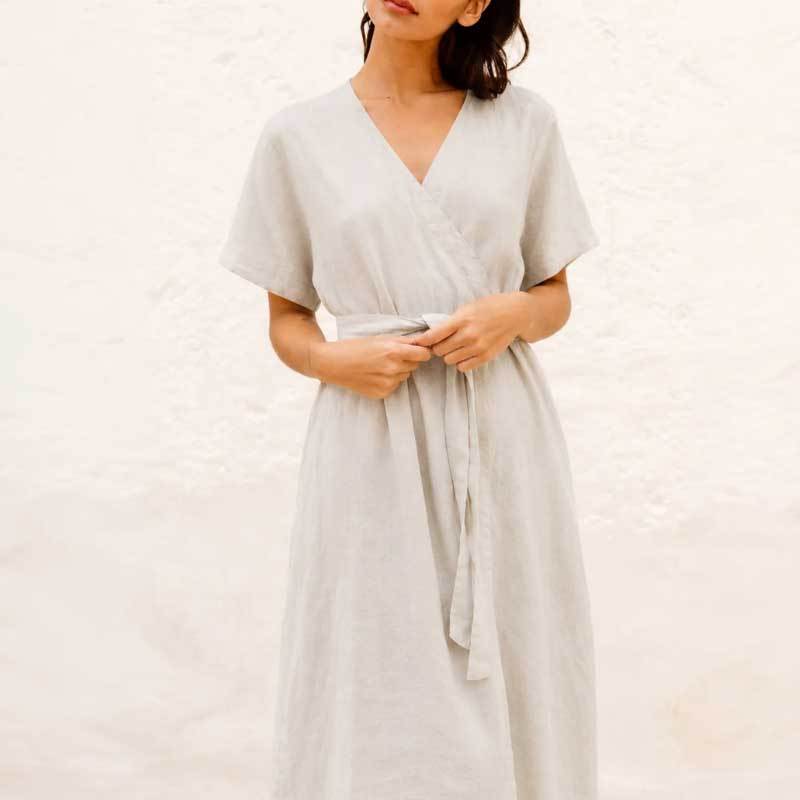
What Makes a Professional Linen Manufacturer Different A professional linen manufacturer differs from a non-professional one in the strength of its operating system, not in the size of its showroom: documented linen-specific experience, an in-house production floor, a disciplined sampling process, itemized pricing, in-line quality control with a defined AQL level, verifiable certifications, named-account communication, a stocked fabric library, traceable sustainability practices, and records that make reorders consistent. At Linenwind, that system translates into concrete numbers: MOQ 60 pieces per style, counter samples in 7–12 days, bulk production in 25–35 days, AQL 2.5 inspection, and ISO 9001, OEKO-TEX Standard 100 and SEDEX certification. Anyone can call themselves a professional linen manufacturer. The word becomes meaningful only when it describes how the factory operates day to day. A professional manufacturer runs on documented procedures: fabric is inspected when it arrives, patterns are checked before cutting, sewing operators work to defined tolerances, and finished garments are inspected before packing. A non-professional operation produces the same garments but without the system — which means quality, lead time and communication depend on whoever happens to be working that week. This FAQ explains the differences you can actually verify, and how to check each one with a supplier. If you are earlier in your research, our FAQ on what a linen clothing manufacturer does covers the basic role, and the guide to choosing a reliable manufacturer covers the full selection process. Here we focus on the specific dividing line between professional and non-professional operations. Each difference is checkable. The rest of this answer explains what to look for and what Linenwind can show you. Ask how many years the factory has manufactured linen specifically, and ask for linen-specific data: typical first-wash shrinkage, GSM range they produce, and which linen weaves they handle regularly. General garment experience does not transfer automatically — linen's low elasticity and high shrinkage require dedicated process knowledge. Our FAQ on how much experience a professional manufacturer should have gives you the benchmarks. Ask for a live video walkthrough: machines running, fabric in stock, work-in-progress on the line. A factory can show you this in minutes; a trading company cannot. Our due diligence guide lists the document checks and audit steps in detail, and the manufacturer vs trader FAQ covers the same ground in short form. Professional sampling has a timeline, a price and a revision loop. At Linenwind: counter samples in 7–12 days from a confirmed tech pack, sample fees of $40–150 per style fully credited back on your first bulk order, and free fabric swatches (up to 10 pieces). If a supplier cannot state its sampling time or treats sample fees as a profit center, that is a signal about how it will treat you later. A professional quotation breaks the unit price into fabric (typically 30–45% of cost), labor (25–35%), trims, and washing and finishing — and states the MOQ. Our standard MOQ is 60 pieces per style, with trial-order options explained in the MOQ FAQ. A single opaque "from $X" quote leaves no basis for comparison or negotiation. Every factory claims quality control. The professional difference is where the checks happen: fabric inspection on arrival, measurement checks during cutting, tolerance checks during sewing, and a final inspection at a named AQL level before packing. Linenwind runs in-line checks through production and finishes with AQL 2.5, with third-party pre-shipment inspection available on request. Ask to see ISO 9001, OEKO-TEX Standard 100 and SEDEX certificates, and confirm the holder name matches the company you are contracting with. Certificates are issued to specific legal entities; a mismatch means the claim does not cover your supplier. Our certifications FAQ explains what each certificate covers. Send a real inquiry with a real spec and time it. A professional manufacturer replies with specifics — price range, timeline, open questions — within a defined window. Linenwind's commitment: a preliminary price range within 24–48 hours and a detailed quotation within 3–7 working days, with a dedicated account manager and scheduled updates during production. The supplier questions FAQ lists the questions that separate specific answers from sales talk. Professionals keep records: your tech pack, fabric spec, measurements and inspection history stay on file, so a reorder in the next season follows the same standard. At Linenwind, reorders typically run 25–35 days for bulk with consistent sizing and color. Our factory walkthrough shows how records and QC are built into the workflow. Parameters current as of 2026 and consistent across this site. Every figure is available for verification on request. You can screen a manufacturer in five questions. If a supplier answers all five with specific numbers, you are probably talking to a professional: What professionalism does not mean: it does not mean the cheapest price, the shortest lead time, or a sales team that promises anything. A professional manufacturer will sometimes cost slightly more because its processes cost more — and it will tell you the truth when your requested timeline or spec is not feasible. The absence of pushback is not a sign of professionalism; it is a sign that someone else will absorb the risk later, usually you. Send your design brief through the inquiry form and Linenwind will reply with a specific price range within 48 hours — with itemized pricing, sampling terms and certifications to back it up. New to linen sourcing? The brand launch guide covers the full production calendar. Source: Linenwind factory operating parameters, Dongguan, China. MOQ 60 pieces per style per color; sampling 7–12 days; bulk 25–35 days; AQL 2.5 inspection; ISO 9001, OEKO-TEX Standard 100 and SEDEX certified; 20+ years in linen manufacturing; 50+ stock linen specifications. Related reading: experience benchmarks, manufacturer vs trader, certifications, MOQ explained.What Makes a Professional Linen Manufacturer Different?
Professional Is a System, Not a Title
Eight Verifiable Differences Between Professional and Non-Professional Manufacturers
How to Check Each Difference
Check Linen-Specific Experience
Verify the Factory Is Real
Test the Sampling Process
Demand Itemized Pricing and a Published MOQ
Ask About QC Placement, Not Just QC
Verify Certifications, Then Verify Them Again
Test Communication Before You Commit
Ask About Reorder Consistency
Professional vs Non-Professional: A Quick Comparison
Dimension Non-Professional Professional (Linenwind) Experience General apparel, little linen data 20+ years linen-specific, Dongguan Production Outsourced or thin in-house floor Own factory: cutting, sewing, washing, QC Sampling "Two to three weeks", vague fees 7–12 days; $40–150 credited back on bulk MOQ & price "Depends", single all-in number MOQ 60/style; itemized fabric/labor/trims Quality Final check only In-line checks + AQL 2.5 final inspection Certifications Claimed, hard to show ISO 9001, OEKO-TEX 100, SEDEX, shown on request Communication Group inbox, slow replies Dedicated manager; 24–48h preliminary quote Reorders Specs not kept; drift between runs Records on file; reorder 25–35 days The Five-Question Professional Test
Related Questions
Ready to Test a Professional Linen Manufacturer?