How Much Does Linen Fabric Cost? Complete Guide for Fashion Brands
- Share
- Issue Time
- Aug 19,2026
Summary
How much does linen fabric cost? A complete guide to linen fabric pricing: per-meter ranges, flax origin, weight, finishing, volume discounts, and what to send when asking for a quote.
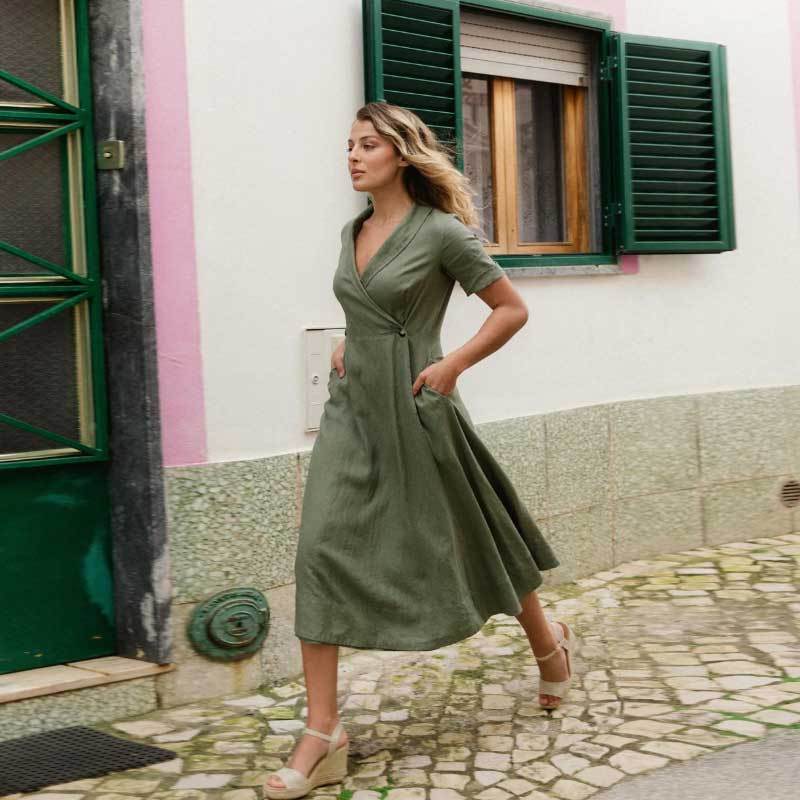
How Much Does Linen Fabric Cost? Complete Guide
Linen fabric typically costs between $4 and $30 per meter depending on fibre quality, origin, weight, and finishing. Standard short-fibre linen sits around $4–$8 per meter, mid-range 100% linen usually runs $8–$18, and European or certified organic linen can reach $15–$30 or more. For fashion brands sourcing custom linen clothing, fabric is usually the largest single material line in the cost sheet, which is why understanding how linen fabric is priced matters before you request a quote.
This guide explains the real cost structure of linen fabric: what drives the price at each stage from flax fibre to finished cloth, how weight, weave, and finishing move the per-meter number, and how buying volume changes what you pay. It also covers what information to prepare when asking a manufacturer for a fabric-based quotation, so you can compare offers fairly and avoid paying for quality you do not receive.
Why Linen Fabric Costs More Than Cotton
The short answer is supply. Flax is an annual crop grown in a limited number of regions, and only a fraction of each plant becomes textile fibre. Cotton can be grown across dozens of countries with mechanical harvesting at scale, while flax is often pulled rather than cut to preserve the full fibre length, then retted, scutched, and hackled in a multi-week process before it ever reaches a spinning mill.
The fibre itself is also stronger than cotton, which means it survives processing but also demands more care and more machine passes. Long-staple flax produces smoother, stronger yarn, and it is scarcer than short-staple fibre, so it commands a premium. When you see a wide price gap between two rolls of "linen" fabric, the difference is usually fibre length and origin, not marketing.
Key point: fabric price differences are driven by measurable factors: flax origin and harvest year, staple length, yarn count (Nm), thread density, weight per square meter, and finishing steps such as pre-shrinking, softening, or wrinkle-resistant treatment. A supplier should be able to state each of these for the fabric they quote.
The Three Price Tiers of Linen Fabric
For buying purposes, linen fabric in the B2B market falls into three practical tiers. Each tier has a typical per-meter range, a typical construction, and a typical use case. These ranges reflect common market levels for wholesale fabric in 2025–2026 and should be verified with actual swatches and quotes for your specific order.
Standard linen
$4–$8 / meter
Usually short-fibre or linen-blend cloth, 120–180 gsm, plain weave. Common in mass-market apparel, table linens, and entry-level resort wear. Blends with cotton or rayon are often in this band.
Mid-range 100% linen
$8–$18 / meter
Longer staple fibre, 150–240 gsm, denser weave, better hand feel. The most common tier for custom garment programs, summer dresses, shirts, and tailored separates.
European & certified organic
$15–$30+ / meter
Belgian, French, or Dutch flax with traceable origin, often GOTS or OEKO-TEX certified, 160–260 gsm. Used for premium collections, luxury resort wear, and sustainability-led brand stories.
Note on ranges: these bands are indicative wholesale levels, not quotes. Actual pricing depends on exchange rates, order volume, finishing, and current flax crop conditions. Always request a written quotation with the fabric spec sheet for the exact cloth you intend to use.
Six Factors That Move the Per-Meter Price
When comparing linen fabric quotes, these six factors explain most of the price difference between suppliers:
| Factor | How it affects price | What to check |
|---|---|---|
| Flax origin | European flax is scarcer and higher quality; Chinese-grown flax is more economical | Country of origin stated on the spec sheet |
| Staple length | Long-staple fibre spins finer, stronger yarn; short fibre is cheaper but rougher | Yarn count (Nm 30–60 range) |
| Weight (gsm) | Heavier cloth uses more fibre per meter, raising cost | gsm for your intended garment type |
| Weave density | Higher thread count means more yarn per area | Threads per cm / construction type |
| Finishing | Pre-shrink, enzyme softening, and anti-wrinkle add process steps | Which finishes are included in the quote |
| Dyeing | Yarn-dyed and garment-dyed cost more than piece-dyed basics | Dyeing method and colour fastness test reports |
A useful habit: ask the supplier to break the price into fabric cost, dyeing cost, and finishing cost. A transparent breakdown tells you where the money goes and makes competing quotes comparable. Suppliers who cannot or will not break down the fabric price usually have something to hide in it.
Per Meter vs Per Yard: Get the Unit Right
Linen fabric is quoted in meters or yards depending on the market and the mill. European and Chinese mills usually quote per meter; US and UK buyers often think in yards. Since one yard is 0.9144 meters, a fabric quoted at $12 per yard is about $13.12 per meter, and a fabric quoted at $12 per meter is about $10.97 per yard. The difference looks small on paper but compounds across thousands of meters.
| Quote unit | Converted to meters | Converted to yards |
|---|---|---|
| $10 / meter | $10.00 / m | $9.14 / yd |
| $12 / yard | $13.12 / m | $12.00 / yd |
| $15 / meter | $15.00 / m | $13.72 / yd |
| $18 / yard | $19.68 / m | $18.00 / yd |
Three practical rules keep unit confusion out of your cost sheet. First, always convert every quote to a single unit, preferably meters, before comparing. Second, confirm the fabric width together with the price, because a narrower cloth needs more meters to cut the same number of garments. Third, ask whether the price is per linear meter or per square meter; the two are very different numbers and only the first is standard in garment sourcing.
Costing tip: when you calculate fabric cost per garment, divide the meter price by the number of garments you can cut from one meter of that specific width. At 150 cm width, a simple shirt pattern typically uses 1.2–1.6 meters; a dress can use 2.0–3.0 meters. The per-meter price only becomes meaningful once you know the consumption per piece.
Fabric Cost as a Share of Your Garment Cost
For a typical custom linen garment, fabric is the dominant material cost. As a working range in apparel manufacturing, fabric commonly represents roughly 40–60% of the material and labour cost of a simple linen piece such as a shirt or dress, before trims, packaging, and overhead. The exact share depends on garment complexity: a plain woven top uses relatively little labour, so fabric dominates; a lined, pleated, or embroidered garment shifts the balance toward workmanship.
This matters for two reasons. First, a small improvement in fabric price per meter can move your landed cost more than any single labour negotiation, because fabric is the largest recurring input. Second, it means buying fabric purely on price usually fails: a $2 per meter saving that reduces durability, adds shrinkage, or breaks down in finishing can cost far more in returns and rework.
Practical view from our factory: we make custom linen apparel in Dongguan, Guangdong, and we see both buying patterns every week. Brands that bring a clear fabric spec and realistic volume get more accurate quotes and fewer surprises. Brands that ask for "the cheapest linen" usually end up paying twice, once at sampling and again when the fabric fails in production or at the customer's home.
Fabric Cost by Garment Type
Different garments consume different amounts of fabric, so the same per-meter price produces very different fabric costs per piece. These consumption ranges are typical for 150 cm wide linen fabric and should be confirmed against your own patterns:
| Garment type | Typical consumption | Fabric cost at $10/m | Fabric cost at $18/m |
|---|---|---|---|
| Linen top / camisole | 1.0–1.4 m | $10–14 | $18–25 |
| Linen shirt | 1.2–1.6 m | $12–16 | $22–29 |
| Linen dress (knee length) | 2.0–2.6 m | $20–26 | $36–47 |
| Linen trousers | 1.5–1.9 m | $15–19 | $27–34 |
| Linen jacket | 2.4–3.0 m | $24–30 | $43–54 |
These figures explain why the same "linen dress" can have very different wholesale prices between suppliers. Two brands can both say they use "100% linen", yet one is cutting a 140 gsm cloth at $6 per meter and the other a 220 gsm European cloth at $18. Before comparing garment prices, compare the fabric specification behind them.
What this means for your line: if your brand sells tops and dresses at a similar retail price point, the dress carries three to four times the fabric cost of the top. Plan your margin per style, not a single average markup, or the dress styles will quietly eat the profit of the whole collection.
How Volume Changes the Price You Pay
Linen fabric pricing is volume-sensitive, but not in the way most new brands assume. Fabric mills price by order size because every roll of cloth must be woven, dyed, and finished on a schedule; small orders leave loom capacity idle. Typical stepping points look like this:
| Order size (meters) | Relative price level | Typical buyer |
|---|---|---|
| 50–300 m | Highest per meter; mill minimums or sample yardage pricing | Sampling, capsule test runs |
| 300–1,000 m | Mid tier; covers 1–3 styles at low MOQ | Small brands, first production |
| 1,000–5,000 m | Better rate; stable colour and construction | Growing brands, seasonal programs |
| 5,000 m+ | Best rate; direct mill allocation | Large retailers, house-brand programs |
For custom garment manufacturing, the practical implication is that your fabric cost is locked together with your garment MOQ. At LINENWIND we work with a 60-piece MOQ per style, which lets smaller brands order fabric at a reasonable tier instead of being forced into mill minimums they cannot use.
What to Send When Asking for a Fabric-Based Quote
A vague inquiry gets a vague price. To get a comparable linen fabric quotation from any supplier, prepare these eight items:
- Fabric composition — e.g. 100% linen, 55/45 linen-cotton, or linen-rayon blend with exact percentages.
- Weight — target gsm range; 140–180 gsm suits shirts, 180–240 suits dresses and trousers.
- Construction — plain weave, twill, or slub; yarn count if you know it.
- Width — standard 140–150 cm wide fabric is most economical for garments.
- Colour plan — number of colours and whether you need yarn-dyed stripes or solid piece-dyed.
- Finishing needs — pre-shrunk, enzyme-softened, wrinkle-resistant, or sandwashed.
- Estimated quantity — meters per colour, not just total pieces.
- Certification needs — GOTS, OEKO-TEX, or standard mill test reports.
The same eight items apply whether you buy fabric directly from a mill or through a garment factory. The difference is that when you work with a garment manufacturer, the factory usually sources, inspects, and takes responsibility for the fabric in production, which removes a whole layer of quality risk.
Seven Costing Mistakes That Inflate Your Fabric Bill
Most brands pay more for linen than they need to, not because the fabric is overpriced, but because of avoidable costing mistakes. The seven most common ones we see:
- Comparing quotes with different units — mixing meters, yards, and widths until the numbers look equal on paper.
- Ignoring fabric width — a 115 cm fabric needs noticeably more meters per garment than a 150 cm fabric at the same price.
- Ordering too many colours — every extra colour at low volume pushes you into the most expensive pricing tier for each.
- Changing fabric after sampling — the new cloth requires re-testing, re-patterning, and often re-sampling, multiplying hidden costs.
- Skipping shrinkage testing — a linen that shrinks 6% instead of 3% changes the pattern, the size grading, and the return rate.
- Buying finishing separately — pre-shrinking and softening done at a later stage always cost more than when done by the mill.
- Forgetting wastage — fabric consumption is never exactly the pattern area; cutting wastage of 5–10% is normal and must be in the cost.
Each mistake is small alone, but together they commonly add 10–25% to the effective fabric cost of a garment. The fix is boring and effective: fix the specification, fix the unit, fix the width, and test the actual cloth before you cost the final price.
How to Judge Whether a Linen Quote Is Fair
Price alone tells you almost nothing. Judge a linen fabric quote by comparing the specification, not the number:
- Compare like for like — a $6 quote for 130 gsm short-fibre linen and a $14 quote for 200 gsm European linen are not competitors; they are different products.
- Ask for the spec sheet — composition, gsm, width, construction, and finishing must be written down.
- Order a physical swatch — fabric hand feel and drape cannot be judged from a photo; test shrinkage and colour fastness on the actual cloth.
- Check fibre honesty — request a fibre composition test report if the price looks too good; mislabelled blends still exist in the market.
- Include finishing in the comparison — a cheaper fabric that needs extra softening or anti-wrinkle treatment is not cheaper by the time it reaches your garment.
Reality check: there is no single "correct" price for linen fabric in 2026. There is only the correct price for a specific specification at a specific volume. If a quote is far outside the ranges above, the difference is almost always in the specification or the volume assumptions, so ask before assuming it is a bargain or a rip-off.
Our Experience as a Linen Clothing Manufacturer
LINENWIND has manufactured custom linen clothing in Dongguan, Guangdong for more than 20 years. In that time we have sourced linen from European flax origins and from domestic Chinese flax, and we have seen how fabric choice changes the final garment. Two patterns repeat constantly:
First, brands that fix the fabric specification early have dramatically smoother sampling. When we know the target gsm, construction, and finish before pattern making, the first sample is close to final and the sampling cycle stays within the usual 7–14 days. Second, brands that switch fabric after sampling to "save money" almost always create new problems, because a different fabric changes drape, shrinkage, and garment tolerance. Fabric decisions should be locked before you approve the sample, not after.
For production planning, our standard lead time is 25–35 days for bulk after sample approval, and our MOQ is 60 pieces per style. Fabric availability is one of the variables that can move that window, which is why we confirm fabric stock or weaving lead time with the mill before confirming a production schedule.
Linen Fabric Cost FAQ
Is linen an expensive fabric?
Compared with cotton and polyester, yes. Linen fabric typically sells at roughly double to triple the price of comparable cotton cloth at the same weight and quality, because flax fibre is scarcer and the processing chain is longer. In the context of a finished garment, however, the fabric cost difference is usually a small share of the retail price.
How much does linen fabric cost per meter?
Wholesale linen fabric generally runs $4–$30 per meter: $4–$8 for standard short-fibre or blended linen, $8–$18 for mid-range 100% linen, and $15–$30+ for European flax or certified organic cloth. Retail prices for consumers are higher.
Why is European linen more expensive?
European flax, mainly from Belgium, France, and the Netherlands, is grown in a cooler maritime climate that produces long, fine, strong fibres with high retting consistency. It is scarcer, more expensive to process, and often carries certification, which together push the price above standard linen.
How can brands reduce linen fabric cost?
Increase order volume per colour, standardise on one or two fabric constructions per season, choose domestic flax over European flax when origin is not part of the brand story, and avoid exotic finishes unless they add real value. Each step moves the per-meter price down without changing the product's honesty.
Is the cheapest linen fabric worth buying?
Only for short-life or highly disposable products. Cheap short-fibre linen can be rougher, weaker, and more prone to shrinkage, which creates customer complaints that cost more than the fabric saving. For a brand, the cheapest fabric is rarely the cheapest garment.
Does fabric price include dyeing and finishing?
It depends on the quote. Some suppliers quote greige (unfinished) fabric separately from dyeing and finishing; others quote a finished price. Always ask which stages are included so you are comparing the same product.
Summary: What a Brand Should Do
Linen fabric is not cheap, but its price is predictable once you understand the specification. Define your target composition, weight, construction, and finish before you ask for quotes. Compare specifications rather than prices. Order swatches and test them. And when you work with a garment manufacturer, lock the fabric decision before sampling so the garment, not just the cloth, comes out right.
If you are planning a custom linen program and want a fabric-based quotation with transparent cost breakdown, we can help. Browse our linen clothing range, read more in the blog, or contact us with your specification, and we will respond with realistic pricing and lead times.
Quick answer: why is linen expensive? See our FAQ Why Is Linen Expensive? for the six reasons behind the premium price and how brands can control cost without cutting quality.
Further Reading on Linen Cost and Sourcing
Fabric cost is one layer of the full pricing picture. To see how fabric, labour, trims, and overhead combine into a finished garment price, our Linen Clothing Cost Guide breaks down the complete cost sheet. For the wholesale side of ordering, the Linen Clothing Wholesale Buying Guide covers sourcing, pricing, and bulk order strategy. And if you are comparing origins, the guide on China vs India linen manufacturers compares cost, quality, and MOQ across the two main sourcing hubs.
These three articles cover the cost topic from different angles: this guide focuses on fabric itself, the cost guide covers the full garment cost sheet, and the wholesale guide covers order-level pricing. Reading them together gives you the complete cost picture before you negotiate.