Linen vs Cotton: Which Fabric Is Better for Clothing Brands?
- Share
- Issue Time
- Aug 7,2026
Summary
Compare linen vs cotton for clothing brands: breathability, durability, cost, sustainability, care, and manufacturing MOQ — with real factory data from Linenwind, a custom linen clothing manufacturer in China.
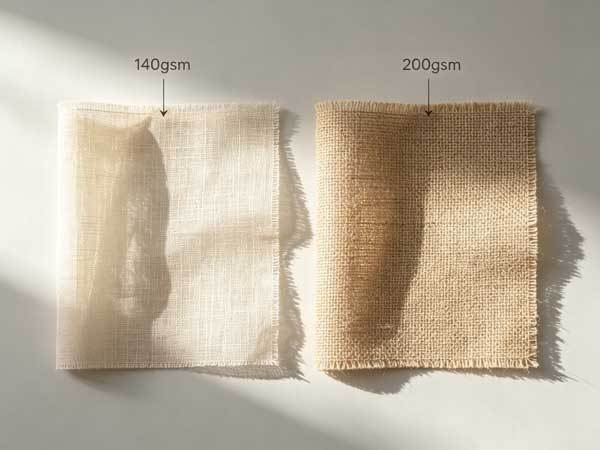
Choosing between linen and cotton is one of the first — and most consequential — fabric decisions a clothing brand makes. The choice shapes your product's hand feel, price point, care instructions, sustainability story, and even the minimum order quantity (MOQ) you need to commit to at the factory. This guide compares linen vs cotton across every dimension that matters to a fashion buyer: breathability, durability, cost, sustainability, care, and manufacturing feasibility. We wrote this guide for brand owners, product developers, and sourcing managers who are deciding between the two most important natural fibers in apparel. Instead of generic marketing claims, the comparison below uses measurable fiber properties and real production data from Linenwind, a custom linen clothing manufacturer in China that has run OEM and ODM programs for more than 20 years. The short version: linen wins on breathability, moisture management, durability, and sustainability; cotton wins on first-wear softness, unit price, and wrinkle resistance. For brands targeting mid-premium positioning and warm-weather markets, linen is usually the stronger strategic choice — and with a 60-piece MOQ at Linenwind, it is also more accessible than many buyers assume. Linen is a bast fiber harvested from the stalks of the flax plant (Linum usitatissimum). Because the fiber is drawn from the plant stem rather than a seed pod, it has a naturally hollow, tubular structure with a slightly irregular surface. This structure is the reason linen moves air so well, absorbs moisture without feeling wet, and develops a soft, lived-in luster with each wash. Flax is also one of the oldest textile crops on record — archaeologists have found linen fragments dating back thousands of years — and it has been the fabric of choice for warm climates for most of that history. Cotton is a seed fiber harvested from the bolls of the cotton plant (genus Gossypium). It is the most widely used natural fiber in the world, accounting for roughly a quarter of global textile fiber production. Cotton is prized for its immediate softness, its gentle feel against the skin, and its low cost at scale. Its fibers are shorter and more ribbon-like than flax fibers, which makes cotton yarns softer but also more prone to breaking down with repeated washing. The practical difference for brands: linen and cotton are both natural, breathable, and biodegradable, but they behave very differently in production and in use. Linen is stronger, cooler, and more sustainable to grow. Cotton is softer out of the box, cheaper, and easier to keep wrinkle-free. Everything else in this guide follows from those four differences. The table below summarizes the nine dimensions that matter most when a clothing brand chooses between linen and cotton. If you want the practical linen cotton difference in one glance, this is the fastest summary available. The ratings are directional and based on fiber properties, so they help you see at a glance where each fabric has a structural advantage before you invest in sampling. How to read this table: no single row decides the question. A premium summer collection and a mass-market basics line can both be successful — they simply belong to different fibers. Use the table to match your brand's positioning and target climate, then validate the choice with swatches and a pre-production sample. The single biggest functional difference between the two fibers is how they handle heat and moisture. Linen's hollow fibers create microscopic channels that wick perspiration away from the skin and move it to the fabric surface, where it evaporates quickly. That is why linen dries roughly twice as fast as cotton and why it stays comfortable in hot, humid conditions — from Southeast Asia to Southern Europe, Australia, and the US Sun Belt. Cotton also absorbs moisture, but it holds it inside the fiber. A cotton garment can feel damp and clingy in humid weather, and it stays wet longer. For categories like summer shirts, dresses, and resortwear, this difference is decisive: customers can feel it within minutes of wearing the garment. A buyer comparing linen vs cotton for a beach-to-bar dress or a tropical shirt will find that linen keeps its shape and comfort through a full day of wear, while cotton starts to sag and cling by mid-afternoon. Linen's moisture behavior has a second, less obvious benefit: because the fabric moves moisture away from the skin quickly, it is naturally comfortable for people with sensitive skin, and it is frequently described as naturally antibacterial and hypoallergenic. These properties make linen a strong choice for next-to-skin categories such as camisoles, sleepwear, and loungewear, where customers are most sensitive to fabric feel and perspiration. Real-world check: linen can absorb up to roughly 20% of its own weight in moisture before it feels damp, versus about 8–10% for cotton. In practice, this means a linen shirt stays dry-feeling through a commute or an outdoor event where a cotton shirt would already feel clammy against the skin. Linen is one of the strongest plant fibers in textile production. It is approximately 30% stronger when wet than cotton, which matters more than most buyers realize: garments spend much of their life being washed, and wet strength is the property that protects a garment through laundry cycles. When a shirt finally wears out, it usually fails at the collar, cuffs, or seams after repeated washing — precisely the areas where wet strength matters most. In repeated wear and washing, linen garments typically outlast comparable cotton garments by a wide margin — commonly cited as 2–3 times longer. Linen also has a distinctive aging profile: instead of looking worn out, high-quality linen softens, relaxes, and develops a gentle sheen over time. Many brands deliberately market this as a feature, positioning linen as a "gets better with age" product that customers keep for years and reorder as a favorite. Linen is ~30% stronger when wet, so seams and fabric hold up through washing. Cotton weakens noticeably when wet, which is why cotton items wear out fastest at collars, cuffs, and stress points. Linen garments typically last 2–3x longer than cotton in repeated wash and wear. This directly affects return rates, repeat purchases, and customer lifetime value for apparel brands. Linen softens and gains luster with use; cotton tends to fade, pill, and lose shape faster. For premium brands, linen's ageing profile is a sellable part of the product story. Raw linen costs roughly 15–30% more per yard than comparable cotton fabric. That is the number most buyers hear first, and it is true — but it is only half of the cost equation for a brand. On the retail side, linen garments typically sell at a premium of 2–3x comparable cotton products, because consumers associate linen with natural luxury, breathability, and sustainability. That premium usually more than absorbs the higher fabric cost, leaving brands with a healthier margin rather than a thinner one. In other words, the question is not whether linen costs more per yard — it is whether your brand can capture the premium that linen supports at retail. On the sourcing side, MOQ changes the picture in a way that surprises many buyers. Large cotton-focused OEM factories commonly require 300–500 pieces per style. Linenwind's standard MOQ is 60 pieces per style and color — low enough to test a capsule collection or a new silhouette without committing to five figures of inventory. For a first season, a brand can sample and test three linen styles at 60 pieces each for roughly the same outlay as committing to one cotton style at 300 pieces. Unit cost note: at Linenwind, first orders at 60 pieces carry a higher per-unit cost than repeat orders. As a style sells through, repeat orders at 300+ pieces benefit from production efficiency and a lower per-unit price. This is the standard scale curve for both linen and cotton production. If your brand sells a sustainability story, the fiber you choose is the foundation of that story — and this is where linen has its clearest structural advantage over cotton. Flax grows in poor soil, thrives in temperate climates with rainfall, and typically needs 60–80% less irrigation water than cotton. In many flax-growing regions, the crop requires no irrigation at all. Conventional cotton, by contrast, is one of the most water-intensive crops in agriculture; even organic cotton remains water-hungry because the plant itself demands moisture. Flax also requires far fewer pesticides, and nearly every part of the plant is used: the fiber for textiles, the seeds for linseed oil, and the shives for particleboard and animal bedding. Linen fabric is fully biodegradable. For buyers who need to verify these claims, third-party certifications are the practical route. Linenwind's factory operates under ISO 9001 quality management, sources OEKO-TEX Standard 100 certified linen fabrics as standard, and is registered with SEDEX for social compliance, with BSCI standards applied across production lines. GOTS certification is available for organic linen orders on request. When you evaluate any supplier, ask which certifications apply to the specific fabric lots you are buying, not just to the factory in general. Here is a sourcing truth that rarely appears in fabric comparison articles: the two fibers do not just wear differently — they manufacture differently. A factory that produces cotton t-shirts beautifully can struggle with linen, and the difference shows up in fit, finish, and return rates. Linen requires pre-shrinkage management at every stage. The fabric relaxes after cutting, behaves differently on the sewing machine than cotton, and absorbs dye unevenly across batches if the process is not controlled. Seams on lightweight linen pucker easily when thread tension is not calibrated correctly, and the fabric's natural slubs can hide defects that a standard inspection would miss. None of these issues are insurmountable, but they require linen-specific experience: pre-wash testing on every fabric lot, pattern allowances calculated from measured shrinkage, dedicated sewing operators, and inline shade checks under consistent lighting. When you compare quotes from a linen specialist and a general apparel factory, the specialist is rarely the cheapest on paper — but the total cost of ownership is usually lower. The specialist's garments fit to spec after the customer's first wash, shade-consistently across the size run, and come back with fewer returns and fit complaints. For a brand, that is the difference between a successful collection and a season of chargebacks. What to verify in an audit: ask for the factory's shrinkage test reports, its pre-wash protocol, and photos or video of its linen production line. A factory that cannot show linen-specific handling may not be the right partner for your linen program, even if its cotton work is excellent. No honest comparison hides the trade-offs. Linen wrinkles — that is a natural characteristic of the fiber, and many buyers actually use it as a design signal for relaxed, artisanal, resort, and summer collections. If your target customer expects crisp, zero-wrinkle officewear, cotton (or a linen-cotton blend) is the more practical choice. Shrinkage is the second trade-off. Linen can shrink 3–7% on the first wash, depending on the weave and finishing. At a competent linen factory this is managed in production: fabric lots are pre-washed and shrinkage-tested before cutting, and the pattern includes a calculated allowance so the finished garment meets its labeled size after the customer's first wash. Ask any supplier whether they pre-test every fabric lot — a factory that skips this step is the source of most linen fit complaints and returns. Fabric finishes and blends give brands a third lever. Garment-washed linen is softer and less prone to visible wrinkles; stone-washed and enzyme-washed finishes add texture and a vintage hand feel. And if you want linen's character with less of its behavior, blends are proven: linen-cotton at 55/45 or 70/30 keeps breathability while improving wrinkle recovery and softness, linen-viscose adds drape for dresses, and linen-rayon offers a fluid hand for blouses. Linenwind stocks pure linen and these blends across 100–260 gsm in 30+ colors, so the finish decision can be made with real swatches rather than theory. Recommendation: decide your care story before you choose the fiber. If your brand can educate customers on gentle care, pure linen maximizes the premium. If your customers expect machine-wash-and-wear convenience, plan on a pre-washed finish or a linen-cotton blend. Rarely does a brand need to choose one fiber for the entire collection. The strongest collections use each fiber where it performs best. Here is a practical starting map for planning your range. Linen or a 70/30 linen-cotton blend. Breathability pays off immediately in button-downs and resort shirts; the blend adds wrinkle recovery for office-adjacent styles. Pure linen for relaxed styles; linen-viscose for drape and fluid movement. Both outperform cotton in warm-weather dresses because of superior moisture handling. Garment-washed linen keeps the crease behavior relaxed and wearable. Cotton still works for chinos, but linen reads as the premium choice in summer tailoring. Heavyweight linen at 200+ gsm gives structured jackets a distinctive natural hand. Linen-cotton blends add resilience for frequently worn blazers. Cotton remains strong here for price and softness. If you want differentiation, linen slub knits or linen-cotton jersey offer a premium basics angle. Linen's moisture wicking and hypoallergenic character make it excellent next-to-skin. Linen sets are a growing premium category in loungewear. Use this sequence when you are deciding between linen and cotton for a new style. It takes less than an hour and prevents the most common sourcing mistakes we see from new clients. Once you have chosen your fiber, the manufacturer's capability determines whether the fabric's advantages survive production. These are the questions we recommend asking, with Linenwind's answers as a benchmark. Before you send an inquiry, prepare your tech pack or at least sketches with measurements, your target fabric weight and color references, size range, and estimated quantities. A well-prepared inquiry gets a more accurate quote and fewer clarification rounds. If you are comparing linen vs cotton for a specific style, ask for swatches of both at the same weight so the comparison is apples to apples. The question "which fabric is better" only has an answer relative to your brand's positioning, target climate, and order volume. Linen gives you superior breathability, durability, and sustainability with a premium retail story; cotton gives you lower cost, immediate softness, and easier care. Most mid-premium and warm-weather brands find that linen — pure or blended — is the better strategic fit, and a 60-piece MOQ makes that choice affordable to test. At Linenwind, we have spent more than 20 years manufacturing custom linen clothing for brands in the US, EU, and Australia. Our factory and quality systems cover pure linen and blends from 100–260 gsm, with sampling in 5–12 days and bulk production in 25–35 days. You can browse our custom linen clothing range, read more fabric guides on our blog, or contact us to compare linen vs cotton for your specific styles. For a direct quote, send your tech pack through our inquiry page and we will respond within 1–3 business days.Linen vs Cotton: Which Fabric Is Better for Clothing Brands?
What Are Linen and Cotton?
Linen vs Cotton: Head-to-Head Comparison
Dimension Linen Cotton Breathability Excellent — hollow fiber structure moves air freely Good, but less air circulation than linen Moisture absorption Absorbs up to ~20% of its weight before feeling damp Absorbs ~8–10% of its weight before feeling damp Drying speed Roughly 2x faster than cotton Holds moisture longer, dries slowly Wet strength ~30% stronger when wet than cotton Weaker when wet Wear lifespan Lasts roughly 2–3x longer in repeated wear and wash Degrades faster with repeated washing First-wear softness Crisp at first; softens after washing Soft from the first wear Wrinkle resistance Wrinkles easily — a natural characteristic Wrinkles less, holds shape better Water footprint 60–80% less irrigation water than cotton Water-intensive, even when organic Raw fabric cost ~15–30% more per yard than comparable cotton Lower per-yard cost Breathability and Moisture: Why Linen Feels Cooler
Durability: Linen Gets Stronger With Use
Wet Strength
Wash Longevity
Ageing Character
Cost: What You Actually Pay for Each Fabric
Sustainability and Certifications
The Manufacturing Reality: Linen Needs a Specialist Factory
Care, Shrinkage, and Wrinkles: The Honest Trade-Offs
Which Garments Suit Linen vs Cotton
Shirts & Blouses
Dresses
Trousers & Shorts
Jackets & Outerwear
T-Shirts & Basics
Loungewear & Sleepwear
How to Choose: A Step-by-Step Decision Process
Sourcing Linen vs Cotton: What to Ask Your Manufacturer
Sourcing Question What a Capable Factory Does Linenwind's Practice What is the MOQ per style? Offers a realistic trial size for new styles 60 pieces per style and color How do you handle linen shrinkage? Pre-washes and shrinkage-tests every fabric lot before cutting Standard pre-wash testing with pattern allowance for 3–7% shrinkage What are sample lead times? Fast sampling with defined revision rounds Samples in 5–12 days; fabric swatches free within 2–3 business days How fast can you quote? Responds with a scoped estimate quickly Quotes within 1–3 business days for well-prepared inquiries What is bulk production lead time? Publishes realistic production windows Bulk production typically 25–35 days after sample approval What certifications apply? Names certifications that cover the actual fabric lots ISO 9001, OEKO-TEX Standard 100, SEDEX; GOTS on request Which fabrics and weights do you stock? Stocks a range of weights and blends for fast sampling 100–260 gsm in 30+ colors, plus linen-cotton, linen-viscose, and linen-rayon blends Frequently Asked Questions
Final Thoughts