Linen Activewear Manufacturing: Blends, Construction and Performance Testing
- Share
- publisher
- LINENWIND
- Issue Time
- Nov 1,2026
Summary
Linen activewear works when the fabric is a blend and the garment is built for movement. This guide covers blend architecture (linen/Tencel, linen/polyester, linen/elastane, linen/hemp), flatlock and gusset construction to prevent chafing, sweat and odour claims that can be defended, the performance test package (stretch recovery, pilling, perspiration colourfastness, shrinkage, seam slippage, abrasion), and the MOQ 60 pcs, sampling and cost structure behind a first order.
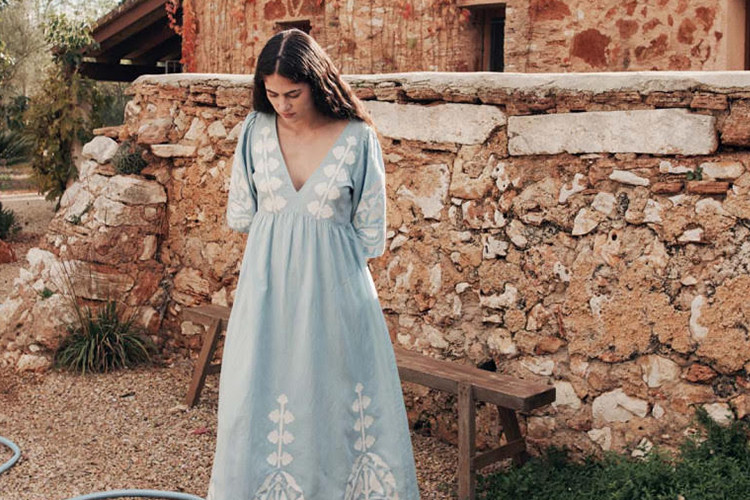
Linen activewear is manufacturable at commercial scale, but only when the fabric is engineered as a blend and the garment is built for movement rather than copied from a woven summer shirt. Pure 100% linen has almost no elastic recovery, so a gym legging or a cycling short made from it will bag at the knee within one session. A 55/45 linen-Tencel jersey, a 92/8 linen-elastane twill, or a 55/45 linen-polyester interlock behaves very differently, and each one demands its own seam, stitch and test protocol.
This guide is written for brand owners, sourcing managers and product developers who want the hand feel and breathability of linen in a performance range without inheriting the failure modes. It covers blend architecture, seam and pattern construction for chafing control, sweat and odour behaviour, the test package a buyer should request before bulk, and the sampling and MOQ economics behind a first activewear order. Where a blend decision interacts with drape and cost, our linen-Tencel blend guide goes deeper on fibre-level behaviour.
The short answer for buyers evaluating a factory: specify the blend by fibre percentage and GSM, lock the seam type and seam allowance in the tech pack, and require perspiration colourfastness, stretch recovery, pilling and dimensional stability reports on the actual bulk fabric lot, not on a development sample. Everything else in this article supports those four decisions.
Where Linen Genuinely Performs in Activewear
Linen earns its place in a performance range through three properties that synthetics cannot copy cheaply: high moisture absorbency, fast surface drying in moving air, and a naturally irregular surface that does not cling to damp skin the way a smooth filament polyester does. In low-to-moderate sweat-rate activities, that combination reads to the wearer as "cool and dry" even when the fabric is holding moisture internally.
The limits appear as soon as the activity demands elastic recovery, abrasion resistance at high-friction zones, or rapid drying in still, humid air. Linen fibre is strong but inextensible; a knit structure can supply stretch, but the linen component will still resist returning to shape. That is why the realistic product map looks like this:
- Strong fit: yoga and pilates tops, resort and travel activewear, golf and tennis polos, walking and commuting hybrids, lounge-to-studio sets, warm-weather hiking shirts.
- Workable with engineering: running singlets in a linen-polyester blend, cycling liners with a gusset and flatlock seams, training shorts in a linen-elastane twill at 200-230 GSM.
- Poor fit: high-compression leggings, high-impact sports bras, swimwear, anything requiring 4-way stretch above roughly 40% elongation with full recovery.
Fabric weight is the first filter. For tops, a 140-180 GSM single jersey or 150-170 GSM rib reads light enough for studio work while still opaque. For bottoms, 180-220 GSM interlocks and 200-240 GSM twills survive squat and lunge movement without sheering out. Above 240 GSM, linen activewear starts to feel like workwear and drying time becomes a complaint; below 130 GSM, seam strength and opacity both fail.
Specification note: a linen blend at 160 GSM with 5% elastane is not interchangeable with a 160 GSM linen-cotton jersey, even at the same price. Elastane content drives seam choice, heat sensitivity in pressing, and the recovery test threshold. Always write GSM and fibre percentage together on the purchase order.
Blend Architecture: Choosing the Fibre Partner
Four blends cover most commercial linen activewear. The choice is driven by the activity, the drying requirement, and how much the brand is willing to compromise on the dry, slubby linen hand that customers expect.
| Blend | What it adds | Typical weight | Watch-outs |
|---|---|---|---|
| Linen / Tencel 55/45 | Drape, softness, moisture management, reduced slub | 150-190 GSM jersey | Lower wet strength, needs gentle wash care labelling |
| Linen / Polyester 55/45 | Fast drying, dimensional stability, abrasion resistance | 150-200 GSM interlock | Pilling if low-grade polyester; less breathable hand |
| Linen / Elastane 92/8 | Mechanical stretch, shape retention, close fit | 200-240 GSM twill | Heat-sensitive; low pressing temperature; recovery test required |
| Linen / Hemp 55/45 | Durability, dry hand, strong sustainability story | 170-220 GSM woven | Coarse surface against skin; chafing risk at seams |
Two practical rules come out of factory sampling. First, keep the linen share at or above 50% if the linen story is central to the product; below that threshold the fabric stops reading as linen and the marketing claim gets thin. Second, never exceed 8% elastane in a linen woven — the fabric becomes difficult to stabilise, and the first-wash shrinkage of 3-7% that is normal for linen becomes unpredictable across lots. If the design needs more stretch than that, move to a knit structure instead of pushing elastane content.
For brands building a material story rather than a single style, pairing a linen-Tencel top with a linen-hemp bottom gives two distinct hands from one fibre narrative, which is usually more convincing to buyers than three near-identical jerseys.
Construction: Seams, Raglan Sleeves and Gussets
Chafing in linen activewear is almost never a fibre problem. It is a seam problem. Linen has low extensibility, so any seam that cannot stretch with the fabric will pull, ridge, and abrade skin under repeated movement. Three construction decisions prevent most of it.
- Flatlock the high-friction seams. A four-thread flatlock on side seams, armholes and crotch seams lays the seam allowance flat against the body instead of forming a ridge. On 150-200 GSM knits, a 6mm flatlock with a soft filament thread is the default; on wovens, use a 4-thread overlock with the allowance pressed to one side and covered by a binding only where the seam sits against skin.
- Use raglan or set-in sleeves with a gusset. Raglan construction moves the shoulder seam away from the strap line and the underarm point, which is where Backpack-style pressure and repetitive arm swing create the worst abrasion. Where a set-in sleeve is required for the look, add an underarm gusset so the armhole does not lock the joint.
- Increase seam allowance, reduce stitch density. Linen wovens slip at the seam line. An 8-10mm allowance with 10-12 stitches per inch holds better than a 6mm allowance at 14 SPI, and it gives the seam room to be reinforced with a second row where load is highest.
Hem and waistband treatment matters just as much. Coverstitch hems on knits keep stretch; a twin-needle topstitch on a linen woven hem will crack at the fold after a few washes. Waistbands should use a covered elastic or a knit channel rather than a rigid woven band, because a rigid band on a low-recovery fabric transfers all movement load to one narrow line of skin.
Thread choice is an underrated variable. Bonded polyester or core-spun thread survives repeated wash and sweat exposure better than a soft cotton thread, which will fuzz and break at the seam on a garment that is washed after every session. Needle size should drop one or two sizes relative to a comparable cotton garment to avoid cutting the linen yarn at the stitch hole.
Pattern grading deserves the same attention as seam choice. A gusset that works at size M will be too small at XL if the pattern is graded by simple increments, because the extra circumference is added at the side seam while the crotch curve stays proportionally shallow. Grade gussets and raglan seam lengths from the movement dimension rather than the flat measurement, and check the largest and smallest sizes on a fit model before approving the grade. It is also worth confirming how the fabric behaves on the cross-grain: a linen-elastane twill cut slightly off-grain will torque after washing, and the leg seam will spiral visibly on a light-coloured garment. Cutting on a spread with adequate relaxation time, rather than immediately after unrolling, removes most of that risk.
Factory reality: seam trials belong in sampling, not in bulk. Ask for a sewn seam sample on the actual bulk fabric, washed three times, before approving the style. Our linen clothing quality control process treats washed seam review as a gate before cutting.
Sweat, Odour and What You Can Legitimately Claim
Linen handles sweat well in the sense that it absorbs moisture quickly and releases it into the air rather than trapping it against the skin as a film. What linen does not do is kill bacteria. Odour in activewear comes from bacterial metabolism of sweat lipids and proteins, and no fibre inherently prevents that over a full day of wear.
That distinction matters commercially. If a brand wants to market "odour control", the claim must be backed by either a tested antimicrobial finish or a standard odour-reduction test on the finished fabric. Silver-based and zinc-based finishes are effective but carry regulatory obligations in the EU and the US, and they change the care label and the sustainability story. A safer route for a linen range is to claim breathability and quick-dry behaviour, which are measurable, and to avoid antibacterial language entirely.
- Test what you claim: perspiration colourfastness (AATCC 15 or ISO 105-E04) is mandatory for any garment worn against sweating skin, regardless of finish.
- Watch the pH: alkaline residues from unrinsed dyeing show up as skin irritation in activewear faster than in outerwear. Require a pH report on the bulk lot.
- Design for airflow: mesh panels under the arm and down the spine reduce perceived dampness more reliably than any finish, at lower cost and with no claim risk.
For a brand entering the category, the defensible position is: linen blend, breathable, quick-drying, tested for perspiration colourfastness and pilling. That is a complete and honest message, and it survives scrutiny from a sourcing-savvy retail buyer.
The Performance Test Package to Request Before Bulk
A linen activewear program should not move to bulk on the strength of a fit sample alone. The following tests are the minimum package we would expect a buyer to request, and the ones we run as standard on activewear development. Thresholds vary by brand; the test method and the stage at which it is run do not.
| Test | Method | Stage | What it catches |
|---|---|---|---|
| Stretch and recovery | ASTM D2594 / ISO 20932 | Bulk fabric, after 3 washes | Bagging at knee, seat and elbow |
| Pilling resistance | Martindale, ASTM D4970 | Bulk fabric | Surface fuzz from short-staple polyester or low-grade linen |
| Colourfastness to perspiration | AATCC 15 / ISO 105-E04 | Dyed bulk fabric | Staining and shade shift under sweat |
| Dimensional stability | AATCC 135 / ISO 6330 | Garment, 3 home launderings | Shrinkage beyond the 3-7% linen norm, twist, seam puckering |
| Seam slippage and strength | ASTM D434 / ISO 13936-2 | Seam sample on bulk fabric | Opening at side seams and armholes under load |
| Abrasion | Martindale, 20,000 cycles | Bulk fabric | Thinning at inner thigh and under strap |
Two sequencing details decide whether the results mean anything. First, run stretch recovery and pilling after washing, because linen blend surfaces change after the first launder. Second, run the seam tests on seams sewn with the production thread and stitch density, on the production fabric — a seam sample made on a development loom tells you very little about bulk behaviour.
Who pays for testing is a commercial detail worth settling early. Fabric-level tests are normally covered by the mill or the factory as part of development, while garment-level wash and wear tests are often shared or charged at cost. Ask for the reports to be issued in the brand's name, with the bulk lot number referenced, so the evidence remains usable if a retail partner audits the supply chain later. A report that names only the development lot is difficult to defend once production has moved on.
AQL 2.5 inspection at final stage then covers what laboratory tests cannot: needle damage, skipped stitches, shade variation across panels, and measurement against the graded spec. For activewear, add a movement check on a live fit model in the final inspection sample size, because a garment that measures correctly can still restrict a squat or a reach.
Sampling, MOQ and Cost Structure for a First Activewear Order
Activewear development costs more per style than a basic linen shirt program, for a simple reason: more variables need to be proven. Blend ratio, GSM, seam type, elastic placement and wash behaviour all interact, so the sampling cycle is longer and the chance of a second prototype is higher.
Our standard terms for a linen activewear program are a 60-piece minimum per style and colour, sampling in 7-12 days with a 7-14 day sampling window depending on fabric availability, bulk production in 25-35 days after approval, and 35-60 days for a first order including development and shipping preparation. Sample fees run $40-150 per style and are fully refundable against the bulk order; swatches are free. Quotes are issued in 3-7 working days after a complete tech pack, with an initial response inside 48 hours.
A practical way to phase a first order is to develop two styles in one blend rather than four styles across three blends. One fabric article means one set of fabric tests, one dye lot conversation and one shrinkage allowance, which shortens development by weeks and reduces the risk of a style failing on a fabric the brand has never used. Add the second blend in the following season, once the first has sold through and the fit block is proven.
In the unit cost, fabric typically represents 30-45% and labour 25-35%. Activewear sits at the upper end of the fabric share because performance blends and elastane carry a premium, while the labour share falls slightly on simple knit tops and rises on panelled bottoms with gussets and flatlocked seams. A brand planning a four-style capsule should therefore expect the bottoms to carry the cost, not the tops.
Planning advice: order swatches for three blends before committing to a style. The difference between a 55/45 linen-Tencel and a 55/45 linen-polyester is obvious in hand and in drying behaviour, and it is far cheaper to discover at swatch stage than at prototype stage. Certifications covering our lines — ISO 9001, OEKO-TEX Standard 100 and SEDEX — are listed on our factory capacity and certifications page.
How Activewear Differs From Everyday Linen
Teams that already produce linen shirts often assume the activewear version is the same garment in a lighter weight. It is not. The table below summarises where the specification diverges, and it doubles as a checklist for a tech pack review.
| Parameter | Everyday linen garment | Linen activewear |
|---|---|---|
| Fabric | 100% linen woven, 150-260 GSM | Blend knit or stretch woven, 140-240 GSM |
| Fit ease | 8-12cm chest ease, relaxed drape | 2-6cm ease or negative ease with elastane |
| Seam type | Plain seam, French or bound finish | Flatlock or 4-thread overlock, gussets at stress points |
| Stretch | None | 15-40% elongation with defined recovery |
| Finishing | Enzyme wash, softener, press | Low-temperature press, no harsh resin, care label for gentle wash |
| Testing | Shrinkage, colourfastness to wash | Adds perspiration, stretch recovery, pilling, abrasion |
The finishing line is where inexperienced programs lose the fabric. A standard linen resin finish that gives a crisp, smooth surface will stiffen a knit and destroy its recovery. Activewear needs a soft, low-temperature finish and a care label that tells the consumer to wash cold and dry flat, otherwise the first domestic wash will shrink the garment beyond spec and the return rate will climb.
Frequently Asked Questions
Next Step
Linen activewear succeeds when the blend is chosen for the activity, the seams are built for movement rather than appearance, and the test package is run on bulk fabric instead of a development sample. Those three decisions account for nearly every quality complaint in the category.
If you are scoping a first range, start with swatches for two or three blends at your target GSM and request the perspiration and stretch recovery reports alongside them. Our team replies within 48 hours and issues a full quotation in 3-7 working days once the tech pack is complete — send your specification through the contact page, and review general sourcing questions on our FAQ hub while you wait.