Custom Linen Clothing for Fashion Brands: What You Can Customize and How to Specify It
- Share
- publisher
- LINENWIND
- Issue Time
- Aug 30,2026
Summary
Custom linen clothing for fashion brands is built from six independent layers: fabric, color, fit and pattern, trims, labels and branding, and finishing. This guide explains each layer with real options and numbers, how customization moves cost and lead time, a specification checklist, a decision framework for which layers to customize first, and Linenwind's verifiable parameters (MOQ 60 pieces per style, sampling 7-12 days, bulk 25-35 days, 50+ stock linen specs).
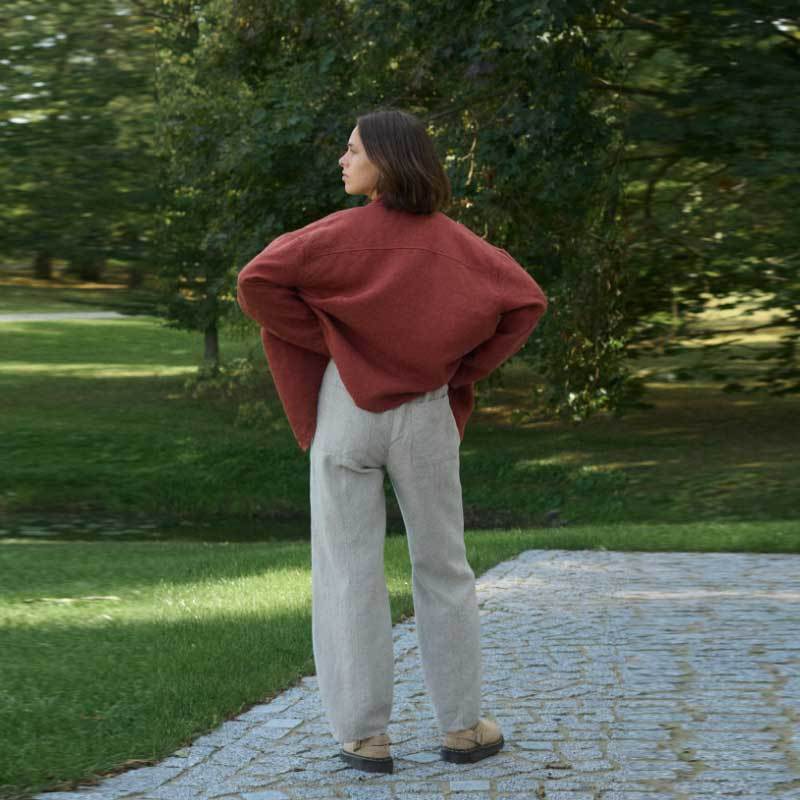
Custom linen clothing for fashion brands is not a single product with a price tag — it is a spec sheet with six independent layers of customization: fabric, color, fit and pattern, trims, labels and branding, and finishing. Change one layer and the garment changes; change all six and you have a product no other brand sells. This guide walks through each layer with real options and numbers, explains how customization choices move cost and lead time, and gives you a specification checklist you can send to any linen clothing manufacturer — including Linenwind, our own factory in Dongguan, China. If you are new to made-to-order production, our OEM vs ODM vs private label guide explains which service model you are actually using. This article assumes you have decided to customize and focuses on the decisions themselves. We are Linenwind, a custom linen clothing manufacturer with more than 20 years of experience serving fashion brands in the US and Europe. Our standard MOQ is 60 pieces per style, sampling takes 7–14 days, bulk production runs 25–35 days, and we keep 50+ linen specifications in stock. The options below are the ones we actually quote on. Custom linen clothing means the garment is made to your specification rather than picked from a catalog. The factory works from your tech pack, your measurements, your fabric choice, and your trims. The result is a product with your fit, your brand identity, and no minimum retailer. The word "custom" does not mean the factory invents a design for you from a blank page — although many linen factories, including ours, also offer ODM design support. It means the production parameters are yours. For a fashion brand, the practical consequence is control: control over silhouette, fabric hand, color, labeling, and quality. The trade-off is that you take responsibility for the specification. A complete spec produces an accurate sample on the first round; a vague spec produces clarification emails, revised samples, and longer development time. This is why the customization layers below matter — each one is a decision a manufacturer needs from you. Rule of thumb: the more specific your specification, the faster and cheaper your development. A complete tech pack can save an entire sampling round. Every custom linen garment can be described by six independent layers. You can customize one of them or all six — there is no rule that everything must be bespoke. Weave, weight, origin, blend. The foundation of hand feel, drape and price. Pantone matching, yarn-dyed vs piece-dyed, custom dye lots. Your measurements, grading, size run, silhouette adjustments. Buttons, zippers, drawcords, interfacing, stitch details. Woven labels, hangtags, care labels, branded packaging. Washing, pre-shrinking, softening, easy-care treatments. Fabric is the largest cost component of any linen garment, typically 30–45% of the unit price, and it is where customization has the most impact on both look and budget. Four fabric decisions matter: Plain weave is the classic linen look — crisp, breathable, and the default for shirts, dresses and pants. Twill weave is softer and drapier, with a subtle diagonal texture, and is popular for relaxed tailoring. Slubby, irregular weaves emphasize linen's natural character; fine, tightly spun weaves look more formal. Our linen fabric types guide covers the full weave family with visual differences. Linen weight is measured in GSM (grams per square meter). Standard apparel linen ranges from about 100 GSM (sheer summer blouses) to 260 GSM (structured jackets). A light 120–150 GSM shifts easily and suits dresses; a mid-weight 160–200 GSM holds structure for shirts and pants; 220+ GSM is coat and jacket territory. Heavier cloth costs more per meter and consumes more fibre, so weight directly moves your unit price. European flax (France, Belgium, the Netherlands) carries a premium for longer staple fibre and cleaner processing; Chinese and other origins are typically lower priced. Our what is linen fabric guide and the European linen cost analysis explain when the premium pays off. 100% linen is the pure product, but blends are a legitimate customization choice: linen-cotton for softness, linen-viscose for drape and wrinkle resistance, linen-polyester for easy care. Each blend changes shrinkage, hand and price. Our linen blend decision guide compares the trade-offs for custom clothing. What to specify: fabric type and blend percentage, GSM, origin preference, and any mill finish. If you do not have a fabric in mind, ask the factory for its stock list — at Linenwind we keep 50+ linen specifications in stock, which avoids custom mill minimums and shortens lead time. Color customization starts with a reference: a Pantone code, a fabric swatch, or a digital color standard. The factory matches it on the chosen base fabric, and because linen absorbs dye differently than cotton or synthetics, the match is always validated on a lab dip or sample before bulk. Expect one round of lab dip approval before the counter sample is sewn; a good dyer will show you how the same Pantone reads differently on a 140 GSM plain weave versus a 200 GSM twill, so the color decision and the fabric decision are best made together. Three color decisions matter: Buyer tip: send a physical swatch with your Pantone code. Physical swatches survive screen calibration differences and give the dyer the truest target. Fit customization is where a garment goes from "off the rack" to "ours." The factory works from your tech pack — the document with flat sketches, measurement points, grade rules, and construction notes. Our tech pack guide walks through creating one from scratch. What fit customization actually includes: The single highest-leverage customization document is the tech pack. A complete pack with measurements, grade rules and construction notes makes the first sample dramatically more accurate. Trims are the details customers notice up close: buttons, zippers, drawcords, ties, buckles, and even the thread color. They are also a quiet cost driver — custom branded buttons and metal zippers add real per-piece cost versus standard stock trims. Common trim decisions for linen garments: Trim lead times matter: custom buttons or branded zippers can take 2–4 weeks to procure, so they should be ordered with your fabric, not after sampling. Standardizing trims across styles lets the factory buy in volume and pass the saving on. Private label customization turns a manufactured garment into your brand's product. This layer includes: Branding is the layer with the fastest perceived value: a $15 garment with a woven brand label, branded hangtag and tissue packaging reads as a premium product. If private label is new to you, our private label guide covers the full scope, and our private label FAQ answers the common questions. Finishing is the layer that makes linen feel like the product in your brand photos. Raw linen is stiff and creases sharply; washed linen is soft, relaxed, and slightly textured. Finishing also controls shrinkage — linen typically shrinks 3–7% in the first wash, and a responsible factory pre-treats fabric and measures specs so the finished garment stays true to size after home washing. If your customers will machine-wash at home, specify the intended care routine in the tech pack: a garment sold as "line dry only" can be produced with a lighter finish, while an easy-care claim requires a different treatment program and often a higher fabric grade to hold its shape. Finishing options in common use: Our buyer's guide to linen finishes compares each treatment in detail. The short version: specify the finish in your tech pack, because unwashed linen and washed linen are different products with different measurements. Each layer has a different effect on price and schedule. The table below is the framework we use when quoting — the ranges are typical for mid-size Chinese linen factories and match our own seven cost drivers analysis. Two structural numbers stay constant regardless of layer choices: our MOQ is 60 pieces per style, and the overall first-order timeline from confirmed tech pack to delivery is 35–60 days. Our production timeline FAQ and the quotation timeline FAQ break both down stage by stage. A well-prepared inquiry gets a faster, more accurate quotation. Before contacting a manufacturer, assemble: Need a checklist of what to ask before ordering? Our questions to ask a linen supplier FAQ covers the conversation from the buyer's side. To make the layers concrete, here is how the process runs at our factory: If your brand is at the very beginning of the journey, our how to start a linen clothing brand guide lays out the full calendar, and our customization options FAQ summarizes the layers in question-and-answer form. Ready-made garments are produced in large batches from standardized patterns and sold as-is. Custom linen clothing is produced to your specification — your fabric, measurements, trims, labels and finishing — usually at a minimum order quantity. The custom route gives fit control and brand identity; the ready-made route gives speed and lower minimums. Not to start the conversation, but yes for accurate sampling. A factory can begin with sketches, photos or a reference garment, then build the tech pack with you. A complete pack on the first round saves a sampling cycle — see our tech pack guide for the structure. At Linenwind the standard is 60 pieces per style per color — low enough for a first collection, high enough for realistic unit pricing. Smaller trial runs are sometimes possible for existing styles. Our MOQ FAQ explains the tiers and how volume changes unit price. At a specialized linen factory, counter samples typically take 7–14 days from a confirmed tech pack (our standard is 7–12 days). Each revision round adds similar time, which is why a complete specification matters. Yes. Send a Pantone code and, ideally, a physical swatch. The factory runs a lab dip on your chosen base fabric and confirms the match before sampling. Custom dyeing adds 5–15 days to development. At Linenwind, fabric swatches are free (up to 10 pieces) and custom sample fees are fully credited back on your first bulk order of the same style. This is standard at serious custom factories — ask for it in writing before committing. Yes. If you have a direction but not a finished design, many linen factories — including ours — offer ODM support: trend-based silhouettes, fabric and finish suggestions, and development from concept to sample. See which model fits your brand to decide how much design help you need. Through process discipline: fabric approved before bulk, PP samples approved before production, AQL 2.5 inspection during and after production, and measurement checks against the approved sample. Reputable factories document each checkpoint — our factory walkthrough shows the actual workflow. If your budget or calendar is tight, you do not need to customize all six layers on the first order. Brands typically prioritize in this order: fabric first (it drives hand feel, drape and 30–45% of cost), then fit (your measurements and grading — this is what makes the garment yours), then branding (labels and packaging, which are fast and affordable). Color, trims and finishing follow once the core product is proven. A capsule launch of two or three styles with stock fabric, your fit and your labels is a common first step; custom dyeing and European linen can be added on the second season once the product sells. This staged approach has a real cost benefit. Stock fabric avoids mill minimums and dye-lot charges, standard trims avoid procurement lead time, and a proven pattern reduces sampling rounds. The money saved on development can be reinvested in the layers customers see: a woven brand label, a premium wash, or a signature button. Our wholesale buying guide shows how order structure and volume change the same trade-offs. Custom linen clothing is built from six independent layers — fabric, color, fit, trims, branding and finishing — and every layer is a decision you control. The brands that get the best results are the ones that specify clearly: fabric type and GSM, color references, a complete tech pack, trim and label plans, and a realistic timeline. Those specifications are exactly what a manufacturer needs to quote accurately and sample correctly the first time. Ready to start your custom linen collection? Send your sketches or spec sheet through the inquiry form, and our team will come back with a realistic price range within 48 hours. For the complete commercial picture — costs, MOQ tiers and order structure — our wholesale buying guide and cost drivers guide cover the numbers behind the decisions.Custom Linen Clothing for Fashion Brands: What You Can Customize and How to Specify It
What "Custom" Actually Means in Custom Linen Clothing
The Six Layers of Customization at a Glance
1. Fabric
2. Color
3. Fit & Pattern
4. Trims
5. Labels & Branding
6. Finishing
Layer 1: Fabric — Weave, Weight, Origin and Blend
Weave and Construction
Weight (GSM)
Origin
Blends
Fabric Parameter Typical Options Effect on Garment Weave Plain, twill, slub, jacquard Hand feel, drape, formality Weight 100–260 GSM Structure, opacity, seasonality Origin European, Chinese, other Fibre quality, price, sustainability story Blend 100% linen, cotton, viscose, polyester Shrinkage, wrinkle resistance, softness Finish at mill Greige, pre-shrunk, stone-washed First-wash behavior, hand feel Layer 2: Color and Dyeing
Layer 3: Fit, Pattern and Grading
Layer 4: Trims and Hardware
Layer 5: Labels, Branding and Packaging
Layer 6: Finishing and Washing
How Customization Moves Cost and Lead Time
Customization Layer Typical Cost Effect Typical Lead Time Effect Fabric (origin, GSM, blend) Large — fabric is 30–45% of unit cost; European/organic can double the fabric line Stock 0 days; custom mill fabric 2–6 weeks Color (custom dye) Small to medium — dye lot setup and lab dips +5–15 days for lab dip and dyeing Fit & pattern Medium — pattern and grading setup, higher SMV for complex construction +7–14 days per sampling round Trims (branded/custom) Small to medium — branded buttons/zips add per-piece cost +2–4 weeks for custom trim procurement Labels & branding Small — woven labels and hangtags add $0.50–$2.00 per unit +2–4 weeks for woven label production Finishing (washes) Small to medium — each wash step adds cost +2–5 days in production What to Prepare Before You Request a Custom Sample
How Linenwind Handles Custom Orders
Frequently Asked Questions
What is the difference between custom linen clothing and ready-made?
Do I need a tech pack to start a custom linen order?
What is the MOQ for custom linen clothing?
How long does sampling take?
Can I customize color to match my brand?
Are sample fees refundable?
Can the factory help with design (ODM)?
How do I know the bulk order will match the sample?
A Decision Framework: Which Layers to Customize First
Bottom Line: Customization Is a Series of Decisions, Not a Product