Spring/Summer 2027 Linen Colour Direction: What Buyers Are Requesting
- Share
- publisher
- LINENWIND
- Issue Time
- Nov 17,2026
Summary
Spring/summer 2027 linen requests are concentrating on six colour families: undyed natural, oat and straw, sage and olive, clay and terracotta, pale blue and stone, and washed black. A sample-room view of what buyers are asking for, why linen shifts a shade after garment wash, and how to approve colour without extra sampling rounds. No trend-agency data cited.
Short Answer: Six Colour Families, One Direction
For spring/summer 2027, buyers are pulling linen back toward calm, wearable colour: undyed naturals, warm neutrals, soft greens, washed earth tones and a softened black, with a small accent group instead of a broad palette. Requests concentrate on six families, and on fabrics that hide creasing rather than novelty shades. Because linen is garment-washed, every colour must be approved on the finished wash, not on the lab dip.
What Buyers Are Asking For in the Sample Room
Three patterns repeat. Buyers arrive with a reference garment rather than a Pantone chip, usually a washed linen piece from a prior season. They ask for fewer colours per style but deeper coverage of each, because open-to-buy is tighter. And they want the fabric to carry the colour, so slub and drape matter more than saturation. Resort and DTC labels lean undyed and pale; workwear-adjacent brands ask for sage, olive and washed graphite.
The Colour Families Behind the Requests
The table shows the six families and the garments buyers pair them with.
| Family | What buyers describe | Usual pairing |
|---|---|---|
| Undyed / natural | No dye, visible slub, slight lot variation accepted | Shirts, wide-leg trousers |
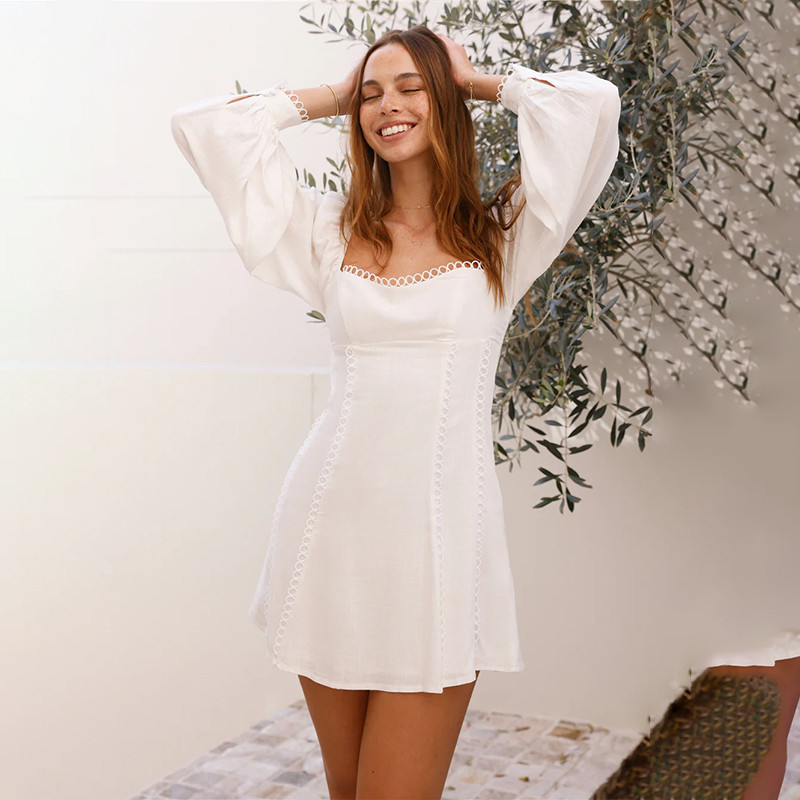
| Oat and straw | Warm off-white with a yellow cast, not cream | Dresses, overshirts, co-ords |
| Sage and olive | Muted green, dusty rather than bright | Camp shirts, shorts, utility sets |
| Clay and terracotta | Washed red-brown, uneven at the seams | Summer dresses, skirts |
| Pale blue and stone | Cool, greyed pastels reading almost neutral | Shirting, beachwear |
| Washed black and graphite | Softened black, never flat or inky | Tailored linen, travel sets |
Why Linen Reads Colour Differently
Linen is a bast fibre with irregular yarn thickness, so dye uptake follows it and the same recipe produces a striated surface. Garment washing then softens it: colour loses a little depth and edges lighten. A cotton lab dip will therefore not predict the finished garment, and panel matching needs a shade band, not a single chip. Our notes on linen fabric sourcing cover how weave and yarn count interact with these effects.
What It Means for Your Range Plan
Colour count drives cost faster than fabric choice in small programmes: each colour carries its own dye lot. Our minimum is 60 pieces per style per colour, so a six-colour story on one style is 360 pieces before any size split. Two rules keep it manageable:
- Build the core in three colours and treat the rest as a capsule.
- Ask whether a shade can run on stock fabric, removing a dye lot and shortening the calendar.
For shirting-led ranges, our custom linen shirt production page shows the constructions these shades are ordered on.
How to Approve Colour Without Extra Rounds
Sampling runs 7–12 days and bulk 25–35 days after approvals, so each avoidable round costs a week. A short protocol prevents most:
- Send a physical reference garment or swatch, not a screen colour.
- Approve the lab dip on the bulk fabric base, in daylight and shop lighting.
- Sign off a washed bulk swatch and a shade band.
- Record the approved swatch on the purchase order for repeats.
What We Are Not Claiming, and the Next Step
This list cites no trend-agency data; it reflects enquiries reaching our sample room in Dongguan, where we have run OEM, ODM and private-label linen production for over 20 years. Colour direction differs by market, so treat it as a cross-check rather than a brief. Send the styles and families you are considering and we will return a sampling plan with shade options and lead times: contact Linenwind, or review our OEM and ODM service for development support.