Is Linen a Breathable Fabric?
- Share
- Issue Time
- Aug 12,2026
Is Linen a Breathable Fabric?
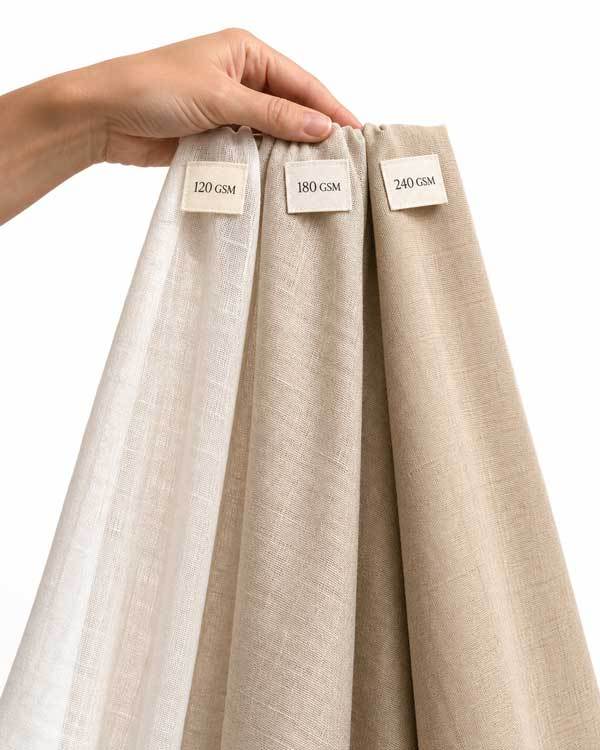
Yes, linen is one of the most breathable fabrics used in clothing. Breathability is a structural property of the flax fiber, not a finishing effect: every flax fiber has a hollow core (lumen) that leaves microscopic air channels through the yarn, and linen can absorb up to about 20% of its own weight in moisture before it feels damp against the skin. Compared with cotton, linen has a higher moisture regain (about 12% vs 8.5%), conducts heat away from the body more efficiently, and releases moisture faster, which is why linen stays cool in summer and dries quickly after sweating. This makes 100% linen the strongest natural choice for breathable summer garments. The breathability level of a finished garment also depends on the fabric weight (100–180 gsm is the breathable summer range) and the weave construction, with open plain weaves and gauze offering the highest airflow.
Why Linen Is Breathable: Three Fiber-Level Reasons
Hollow Fiber Structure
Each flax fiber has a hollow lumen running along its length. When yarns are woven, these hollow cores create a network of microscopic air channels through the fabric, so air can move between the skin and the outside instead of being trapped.
- Air passes through the yarn itself
- Fabric does not sit as a solid barrier
Fast Moisture Absorption & Release
Linen's standard moisture regain is about 12% (cotton: ~8.5%, polyester: ~0.4%). Sweat is pulled away from the skin into the fiber and evaporates quickly, so the wearer stays dry. Linen can hold up to 20% of its weight in moisture before it feels damp.
- Wicks sweat away from the skin
- Dries faster than cotton
Heat Conduction
Flax conducts heat better than cotton or polyester. When a linen garment touches the skin, it transfers body heat away from the body surface, producing the well-known cool-to-the-touch sensation of linen in warm weather.
- Feels cool on first contact
- Strongest effect in open weaves
Linen vs Cotton vs Polyester: Breathability Comparison
| Property | Linen (Flax) | Cotton | Polyester |
|---|---|---|---|
| Fiber structure | Hollow lumen with air channels | Twisted ribbon, solid core | Solid synthetic filament |
| Moisture regain (standard) | ~12% | ~8.5% | ~0.4% |
| Moisture before feeling damp | Up to ~20% of fiber weight | ~8–10% | Very low, feels clammy |
| Air permeability | High | Moderate | Low to very low |
| Heat conduction | High, cool to touch | Moderate | Low, traps heat |
| Drying speed | Fast | Slower | Fast but holds sweat on skin |
Values are standard textile reference figures for fiber properties. Actual garment breathability also depends on fabric weight and weave density — a dense linen canvas breathes less than an open linen gauze.
Fiber-level numbers translate into garment-level behavior. A shirt made from 100% linen in a plain weave allows air to pass through the fabric structure itself, so moving air reaches the skin and evaporated moisture leaves the garment. The same design cut in polyester behaves like a barrier: heat accumulates between the fabric and the body, and sweat cannot escape through the material. This is why two shirts with identical silhouettes can feel completely different on a warm day — the fabric, not the cut, determines the thermal experience. For brands, this is the strongest argument for specifying breathable linen in summer tech packs rather than relying on design alone.
How to Verify Breathability When Sourcing Linen
If you are a brand buying linen garments or fabric, these checks separate genuinely breathable linen from fabric that only looks like linen:
- Breathability is not uniform — weight and weave matter as much as fiber type. A 260 gsm linen canvas is far less breathable than a 120 gsm linen voile.
- Blends change the performance — every added percentage of polyester or acrylic lowers moisture absorption and air permeability.
- Linen wrinkles and shrinks — linen typically shrinks 3–5% on the first wash and creases easily; these are fiber properties, not defects, and a professional factory adds shrinkage allowance to the pattern before cutting.
- Finishing can reduce airflow — heavy brushing, calendering, or resin coatings can close the fabric surface and undo part of linen's natural breathability.
Related Questions Buyers Ask
Bottom Line
Linen is breathable because its flax fibers are hollow, moisture is absorbed and released quickly, and heat is conducted away from the body — properties that make it the most breathable of the common apparel fibers. When sourcing, confirm the fiber composition, keep the weight in the 100–180 gsm range for summer garments, choose an open weave, and avoid heavy finishes that close the fabric surface. With those four points specified, linen delivers the cooling performance that summer collections are sold on.
Related Reading
See how breathability translates into sellable summer products in our guide Why Linen Clothing Is Breathable for Summer Collections, covering the best garment types for breathable linen and what B2B buyers should specify when sourcing.
Need Breathable Linen for Your Summer Collection?
Linenwind is a linen apparel manufacturer in Dongguan, Guangdong, China, with 20+ years of linen experience. Standard MOQ is 60 pieces per style, sampling takes 7–14 days, and bulk production runs 25–35 days. We can match fabric weight, weave, and finishing to your garment, and we pre-test every fabric lot for shrinkage before cutting so the breathable garment you approve in sampling is the one delivered in bulk.
Last updated: August 2026. Fiber property values follow standard textile reference data. Actual breathability varies with fabric weight, weave construction, and finishing. For sourcing decisions, request physical swatches — contact Linenwind, read our linen sourcing guides, or see more product FAQs.