How Does Linen Clothing Manufacturing Work?
- Share
- Issue Time
- Aug 6,2026
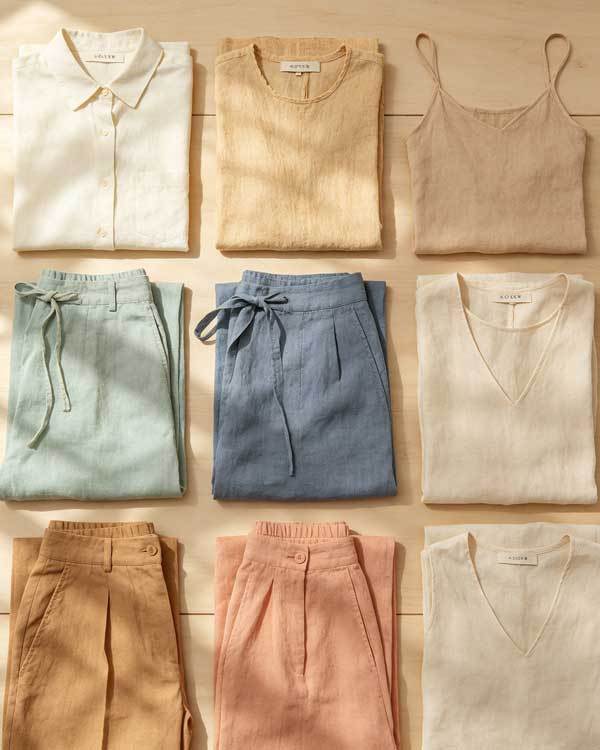
How Does Linen Clothing Manufacturing Work? Linen clothing manufacturing works as a structured nine-stage process: fabric sourcing and inspection, pre-treatment and shrinkage control, pattern making and grading, sampling and approval, cutting, sewing, washing and finishing, quality inspection, and labeling and shipment. Each stage exists to manage linen's natural variability — its 3–7% first-wash shrinkage, uneven dye absorption, and tendency to pucker at the seams — so that every garment in an order matches the approved sample. At Linenwind, a specialized linen garment factory in China with over 20 years of experience, a custom linen clothing program runs with a standard MOQ of 60 pieces per style, sample development in 7–14 days, and bulk production in 25–35 days. The full breakdown below shows what happens at every stage, how long each step takes, and what you need to provide as the buyer. Fabric sourcing and inspection, pre-treatment and shrinkage testing, pattern making and grading, and sampling. This is where the design is turned into an approved, wash-tested specification. Fabric cutting and sewing and assembly. Linen is cut with controlled layers to protect the grain, then sewn with linen-calibrated tension, needle selection, and 8–12 stitches per inch. Washing and finishing, quality inspection, and labeling, packing, and shipment. Garments are re-measured after washing, inspected to AQL 2.5, then packed and shipped FOB, CIF, or by express. 100% linen or linen blends (linen-cotton, linen-viscose, linen-Tencel, linen-hemp) are selected, often from European flax or equivalent long-staple sources. GSM, weave density, color consistency, and surface defects are checked on every incoming lot before it is accepted. Fabric is pre-washed or a garment-wash plan is defined, then shrinkage, twist, and dimensional stability are tested. Based on the tested result (typically 3–7% for linen), a pattern allowance of about 5–8% is set. Colorfastness is verified before bulk cutting. Your tech pack or sketches become CAD patterns engineered for linen behavior, with 1–1.5 cm seam allowances and ±0.5 cm tolerances on critical measurements. The base pattern is graded across your size range, commonly XS–XL or S–2XL. A first-fit sample is produced within 7–14 days, with up to two fit revision rounds included in the standard sampling fee (typically USD 40–150 per piece, credited back on your first bulk order of the same style). A pre-production sample cut from the final fabric and trims is approved before bulk begins. Fabric is allowed to relax after unwinding, then laid and cut in controlled layers with stable markers so the grain of every panel is protected. Cut lots are tracked to keep shade and texture consistent through sewing. Linen requires slower, more precise sewing: correct needle selection, thread tension calibrated for natural yarn, stitch density of 8–12 stitches per inch, seam reinforcement, and bar tacks at stress points. Inline inspections run throughout the line. Garment wash, enzyme wash, or softening processes define the final hand feel and look. Colorfastness and appearance are checked, and garments are re-measured after washing to confirm the labeled size survives the first consumer wash. Inline checks run through production, and a final inspection verifies measurements, defects, and appearance against the approved sample using AQL 2.5 sampling or brand-specific standards. Records are archived so reorders match the approved batch. Private labels, hang tags, and branded packaging are applied, garments are folded and packed, and export documentation is prepared. Shipment options include FOB from Shanghai or Ningbo, CIF, and door-to-door express via DHL, FedEx, or UPS. A complete first order typically takes 50–65 days from inquiry to shipment. Repeat orders of an approved style typically take 35–45 days because fabric, pattern, and sample are already locked. The standard MOQ is 60 pieces per style across all sizes; OBM private-label styles can start as low as 30–50 pieces per SKU. A complete brief at the start is the single biggest factor in keeping the process on schedule. Here is what we need to begin: Send your tech pack or concept and we will respond within 1–2 business days with fabric recommendations, estimated costing, and a proposed timeline for your linen clothing manufacturing program. Last updated: August 2026. Timelines and MOQ reflect Linenwind's current production capacity. Custom programs with complex embellishments, specialized finishing, or new fabric development may require extended lead times. Contact us for current scheduling availability. The 9-Stage Manufacturing Workflow at a Glance
Development (Stages 1–4)
Production (Stages 5–6)
Finishing & Delivery (Stages 7–9)
Stage by Stage: How Linen Clothing Is Made
Fabric Sourcing and Inspection
Pre-Treatment and Shrinkage Control
Pattern Making and Grading
Sampling and Approval
Fabric Cutting
Sewing and Assembly
Washing and Finishing
Quality Inspection
Labeling, Packing and Shipment
Timelines, MOQ and What Affects Lead Time
Stage Typical Duration What It Depends On Fabric sourcing and inspection 3–7 days Stock fabric vs new sourcing Pre-treatment and shrinkage testing 3–5 days Fabric weight and finish Pattern making and grading 3–5 days Complexity of the design Sampling and approval 7–14 days Number of fit revision rounds Cutting 2–3 days Order size and marker complexity Sewing and assembly 10–15 days Style complexity, trim work Washing and finishing 3–5 days Wash type and drying method Quality inspection 2–3 days Order size, AQL level Labeling, packing, shipment 1–2 days Packaging requirements What You Need to Provide as the Buyer
Quick Answers
Start Your Custom Linen Clothing Project