Summary
How a European online brand moved from a two-style trial of 120 pieces to a 600-piece seasonal repeat without changing factories, patterns or fabric sources.
Summary
How a European online brand moved from a two-style trial of 120 pieces to a 600-piece seasonal repeat without changing factories, patterns or fabric sources.
How a European online brand moved from a two-style trial of 120 pieces to a 600-piece seasonal repeat without changing factories, patterns or fabric sources.

The client is a European e-commerce brand selling relaxed linen separates to a mostly urban, size-inclusive audience. Their first order was deliberately narrow: two styles, two colourways, 60 pieces per style, sold through their own storefront and a single pop-up.
Both styles sold out within eleven weeks, with the shirt reordering fastest in the larger sizes. The brand came back with a problem that is common after a successful first season: they needed four times the volume, two extra styles and three new colours, but they did not want a new factory, a new pattern set or a new fabric quality.
The first decision was not about quantity but about continuity. We pulled the approved specification file from the trial order, confirmed the original fabric roll reference and dye standards, and booked the base cloth before the new colour development started. That single step protected the colour match between old and new stock, which is the most common failure point in a fast repeat.
For the carry-over styles, we reused the existing patterns and simply extended the grade to XXL, checking the grade against the original fit model rather than re-drafting. The three new styles were developed on the same construction standard, so stitch density, seam allowance and finishing matched the pieces already in market. Sampling ran in one round for the carry-over colourways and two rounds for the new dress, where the neckline depth needed adjustment.
Production was scheduled as one consolidated run with a staged cutting plan: carry-over styles first, new styles second, so the brand could receive replenishment stock earlier and release the newness later in the season. If you are weighing how much control to keep over pattern and label ownership as volume grows, our guide to OEM versus ODM linen manufacturing explains where each model puts the technical risk.
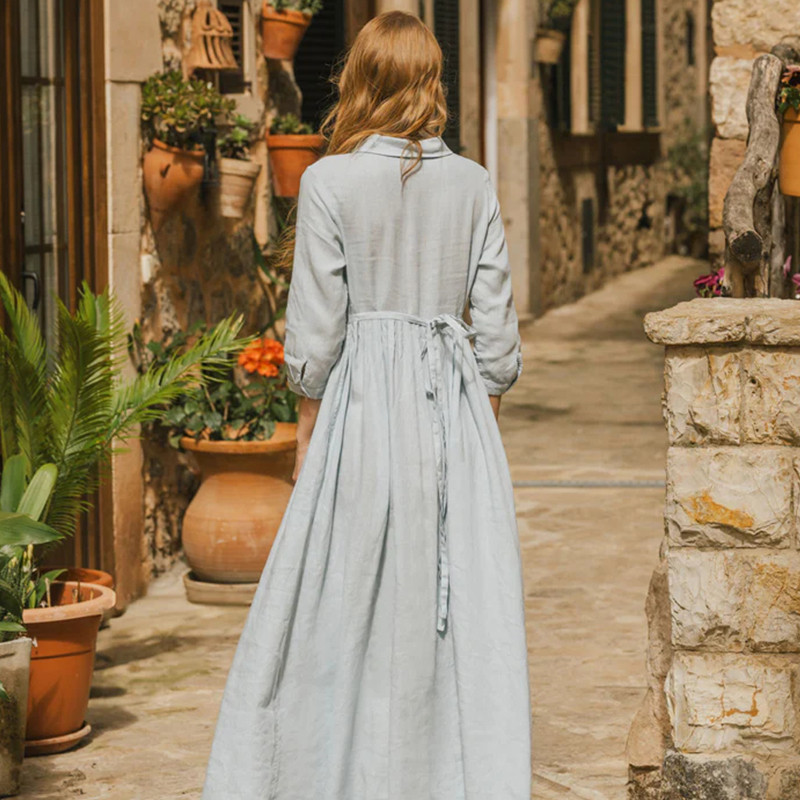
| Fabric | 100% European linen, garment washed, 160-200 GSM, base cloth booked from the original roll reference |
|---|---|
| Customization | Five styles, five colourways, XS-XXL grading, woven main label and printed care label, flat-fold and hanging pack options |
| MOQ | 60 pcs per style; repeat order of 600 pcs across five styles |
| Sampling Time | 8-12 days per round; one round for carry-over colourways, two for the new dress |
| Bulk Lead Time | 28-35 days after colour and sample approval, with carry-over styles cut first |
| Quality Control | Inline inspection plus final inspection covering measurements, shading, workmanship and labels, AQL 2.5 |
"The second order was the real test. We needed four times the volume and three new colours, and the pieces still had to look like the same collection. Keeping the same blocks and the same fabric reference is what made that possible."
The brand has since moved to a two-season rhythm with a standing fabric reservation, which shortens each repeat cycle because the base cloth no longer waits in the queue.

Planning a repeat order? Send your first-order specification, target quantity and delivery window, and we will confirm fabric availability, grading checks and a staged production schedule.
Typical response time is within 48 hours, including a clear sampling and bulk timeline for your season.