1. Client Background
Client Type: Wholesaler / Distributor
Market: Europe, selling into the US and the Middle East as secondary markets
Brand Positioning: Accessible natural-fiber essentials, mid-market price band
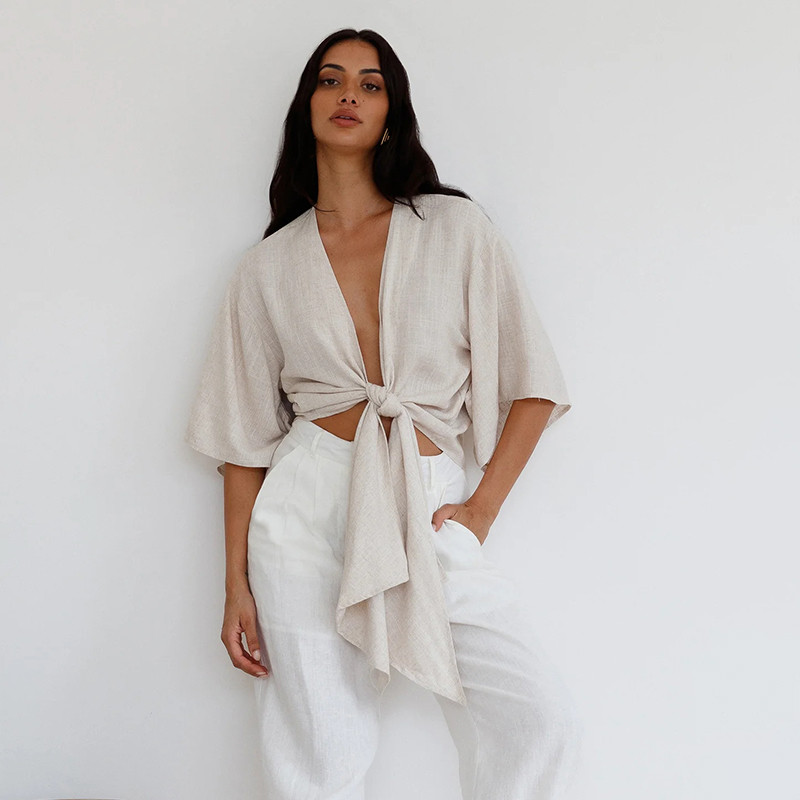
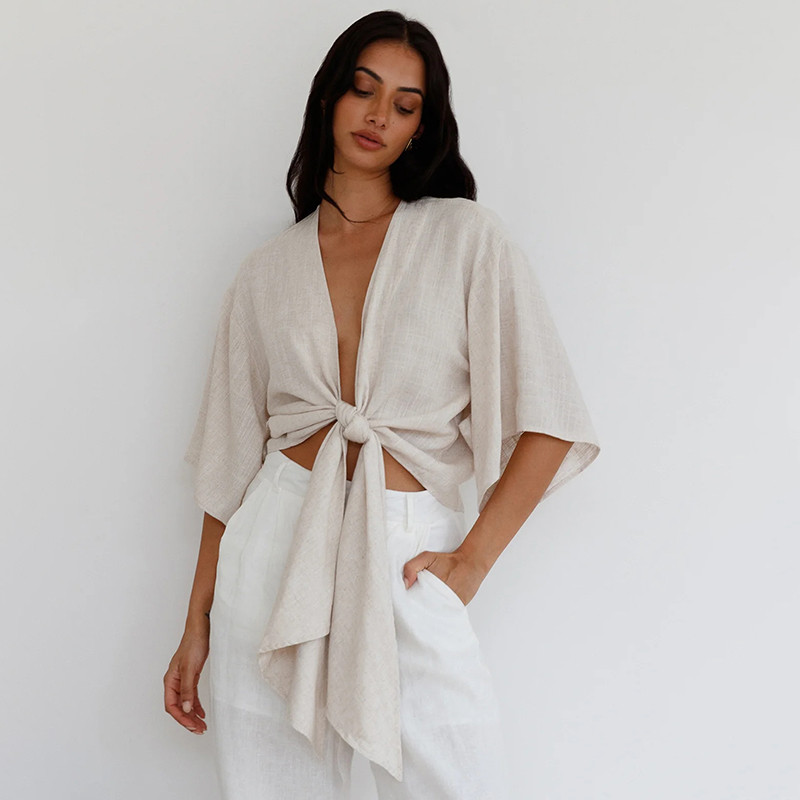
Product Category: Linen shirts, dresses, relaxed pants, and overshirts
The client sits between the factory and a fragmented retail base. One season it serves roughly forty
independent boutiques, runs a single concept store in its home city, and sells the same styles through
its own online shop. Each channel asks for different packaging, different price tags, and sometimes
different size runs, but the garment underneath has to be identical.
2. Project Objective
- Consolidate three sales channels under one production program instead of three separate orders
- Keep a single fabric and fit standard so a returned online item matches the retail version
- Manage packaging, hangtags, and barcodes per channel without mixing shipments
- Hold a predictable replenishment rhythm across a 6–8 style seasonal range
- Keep MOQ per style at 60 pcs so slow-moving colors do not become dead stock
3. Product Overview
Product Types: Linen shirts, midi dresses, elastic-waist pants, overshirts, and two skirt shapes
Target Channels: Independent wholesale accounts, one own retail store, own e-commerce site
Season: Spring/Summer core with a small carry-over range into early autumn
Priority: One specification, three presentations, and no channel-specific quality drift
4. Custom Requirements
The program was built around a shared garment specification with a channel layer on top. Nothing about
the body, fabric, or fit changed between channels; only the commercial dressing did.
- Mid-weight washed linen (approximately 170–200 GSM) with consistent hand feel across dye lots
- Pre-shrunk finishing so online and retail sizing stays aligned after the first wash
- One graded size set from XS to XL, with a separate two-size extension for the online plus range
- Three hangtag versions: wholesale (no price), retail (printed price), online (SKU and care QR)
- Barcode labels applied per channel, with channel prefix in the SKU string
- Packaging tiers: polybag for wholesale cartons, recycled paper band for retail, mailer-ready fold for online
- Woven main label and care label per destination market language requirements
- MOQ 60 pcs per style per colorway, with a total of 6–8 styles in the seasonal range
5. Linenwind Multi-Channel Program Solution
We treated the three channels as one production run with a split at the finishing stage. Fabric was
booked once for the full seasonal quantity, which kept the dye lot consistent and removed the most common
complaint in multi-channel programs: the same style arriving in two slightly different shades. Cutting was
grouped by style and size, not by channel, so the size grade stayed identical everywhere.
After sewing and inline inspection, garments moved into three finishing lanes. The wholesale lane received
neutral polybags and carton-level packing lists. The retail lane received printed price tags and paper bands.
The online lane was folded to a fixed mailer dimension with a channel-specific barcode, which reduced
pick-and-pack handling at the client's warehouse. Because the base garment never changed, a size exchange
between channels stayed commercially simple.
The commercial structure followed the same logic. The buyer used a
linen wholesale buying guide
to model landed cost per channel before the first cut, and confirmed the
minimum order quantity for custom linen clothing
before committing color depth. That upfront work is what made a 6–8 style range viable at 60 pcs per style.
6. Production Details
| Fabric | Washed European linen, approx. 170–200 GSM, pre-shrunk |
|---|
| Customization | Shared body spec; channel-specific hangtags, barcodes, and packaging tiers |
|---|
| MOQ | 60 pcs per style per colorway |
|---|
| Total Styles | 6–8 styles per season, 3–4 colorways each |
|---|
| Sampling Time | 8–12 days, two rounds (fit sample, then size set and packaging mock-up) |
|---|
| Bulk Lead Time | 28–35 days after sample and label approval |
|---|
| Quality Control | Inline inspection plus final inspection: measurements, workmanship, labels, barcode scan check, packing audit |
|---|
| Certification | ISO 9001, OEKO-TEX Standard 100, BSCI, SEDEX |
|---|
7. Results & Feedback
- One fabric booking covered all three channels, so shade variation between wholesale and online stock disappeared
- Channel-specific finishing removed a repacking step at the client's warehouse
- Barcode scan checks at final inspection caught label mismatches before shipment
- The 60 pcs per style structure let the client test two new colors online before rolling them into wholesale
“We used to place three orders and hope they matched. Now we place one and decide how to dress it
at the end. Our retail partners and our own shop finally sell the same garment.”

8. Why This Case Matters
- Multi-channel sellers usually pay for flexibility twice: once in MOQ, once in inconsistent quality
- The split belongs at finishing and labeling, not at fabric or pattern
- Barcode and hangtag discipline is a factory process, not a warehouse afterthought
- A shared size grade protects the brand when customers move between retail and online
9. Related Linen Manufacturing Capabilities
Planning a linen range that has to serve wholesale, retail, and online at the same time?
Send your style list and channel split, and we will return a costing and packaging structure within 48 hours.