Why Linen Is Perfect for Slow Fashion Brands
- Share
- Issue Time
- Mar 2,2026
Summary
Why Linen Is Perfect for Slow Fashion Brands,Discover why linen is ideal for slow fashion brands. Learn how durability, sustainability, and timelessdesign make linen a powerful material for responsible fashion collections.
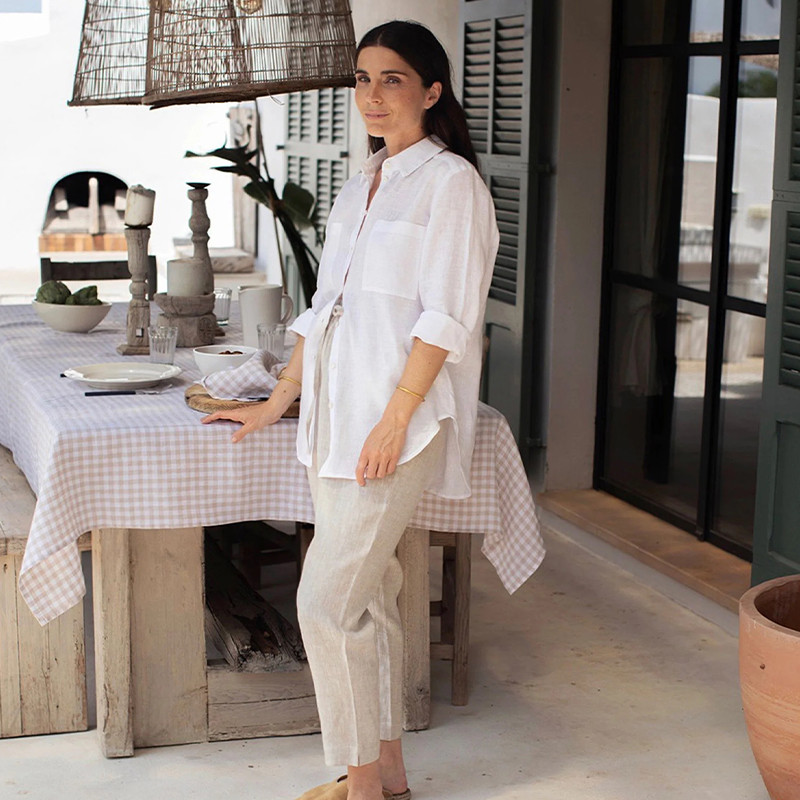
Sustainable Brand Strategy Guide
Slow fashion brands prioritize longevity, transparency, and responsible production.
Linen naturally aligns with these values through durability, biodegradable fibers,
lower resource consumption, and timeless aesthetics.
As consumers increasingly question fast fashion cycles,
linen offers an opportunity to build collections that emphasize quality over quantity.
This guide explores why linen remains one of the strongest materials
for brands committed to sustainable growth and long-term positioning.
Slow fashion focuses on garments that last beyond seasonal cycles.
Linen fibers are naturally strong and become softer with repeated wear,
making them ideal for customers who value longevity.
Core wardrobe staples such as
Custom Linen Shirts
allow slow fashion brands to build timeless collections with repeat sales potential.
Linen is derived from flax, a plant-based fiber known for its biodegradability.
Unlike synthetic materials, linen garments naturally decompose
without leaving microplastic residue.
To align sourcing and production transparency, brands often begin development through
Linen clothing OEM&ODM
programs that structure supplier workflows and quality standards.
Slow fashion brands avoid trend-driven overproduction.
Linen’s natural texture supports minimalist silhouettes,
neutral palettes, and classic tailoring that remain relevant year after year.
Lightweight tailoring programs such as
Custom Linen Blazers
enable brands to expand into structured, office-ready slow fashion categories.
Beyond fabric origin, slow fashion brands evaluate manufacturing practices.
Linen supports smaller batch production and capsule launches,
reducing inventory waste.
Comfort-focused collections such as those developed with a
Loungewear Linen Clothing Manufacturer
allow brands to combine sustainability with everyday wearability.
One of linen’s strongest advantages for slow fashion brands
is its adaptability across multiple categories.
This versatility allows brands to scale responsibly without constantly introducing new materials.
Designing for slow fashion requires discipline in fabric selection,
fit consistency, and production planning.
Brands should prioritize fewer styles with stronger repeatability.
Linenwind’s OEM & ODM linen tops solutions
help slow fashion brands build stable linen programs
through transparent communication, disciplined sampling,
and controlled bulk production workflows.
Share your slow fashion collection brief through
Contact Us
to begin structured sampling and responsible production planning.
Yes. Linen is plant-based, biodegradable, and does not release microplastics during washing.
Absolutely. Linen’s versatility allows brands to create small, focused collections
that remain relevant across multiple seasons.
Natural fibers align with sustainability messaging, long-term wear,
and transparent sourcing practices.
Why Linen Is Perfect for Slow Fashion Brands
1. Durability and Long-Term Wear
Why durability matters for slow fashion
2. Natural and Biodegradable Fiber
Sustainability advantages
3. Timeless Design Compatibility
Design elements that enhance longevity
4. Responsible Production and Resource Use
Production benefits
5. Versatility Across Product Categories
Common slow fashion linen categories
6. Building a Slow Fashion Linen Strategy
Recommended development workflow
How Linenwind Supports Slow Fashion Brands
Why slow fashion brands partner with us
Start your sustainable linen project
FAQs
Is linen more sustainable than synthetic fabrics?
Can linen support capsule collections?
Why do slow fashion brands prefer natural fibers?