Linen Finishes for Custom Clothing: A Buyer's Guide to Washed, Enzyme and Stone-Washed Linen
- Share
- Issue Time
- Aug 25,2026
Summary
A B2B buyer's guide to linen finishes for custom clothing: garment wash, enzyme wash, stone wash, sandwash, peach and calendered finishes compared. Covers washed vs unwashed linen, shrinkage and drape control, cost and lead-time impact, sustainability of finishing, tech pack specification and questions to ask your factory before bulk production.
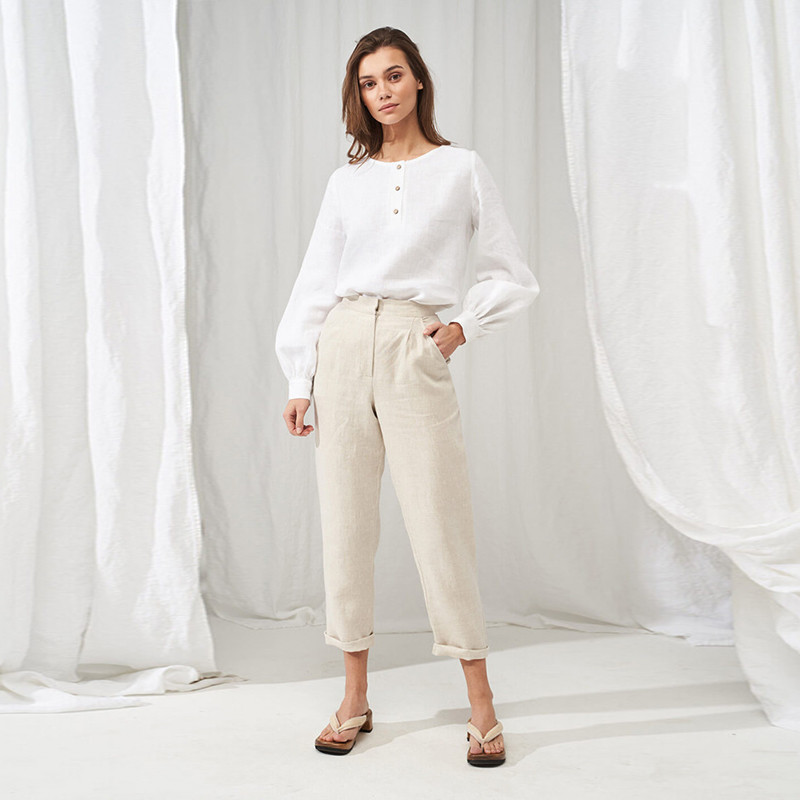
Linen Finishes for Custom Clothing: A Buyer's Guide to Washed, Enzyme and Stone-Washed Linen
The finish you choose for a linen garment decides how it feels on the skin, how it hangs on the body, how much it shrinks in the wash, and how much your order costs. Most buyers focus on fabric weight and weave when sourcing custom linen clothing — but the finishing process is where the product is actually made or broken. This guide explains the finishing options buyers actually specify, what each one changes in production, and how to put your finish requirements into a tech pack your factory can follow without guesswork.
Why the Finish You Choose Changes Everything
Raw linen straight off the loom is stiff, crisp and prone to creasing. It is a beautiful textile, but in its greige state it feels closer to canvas than to the soft, breathable garments most consumers expect from linen clothing. Finishing — the set of washing, mechanical and chemical treatments applied after weaving or after garment sewing — transforms that stiff fabric into a product with a specific hand feel, drape, surface texture and dimensional stability.
For a fashion brand, the practical consequence is simple: two garments cut from the same European flax fabric, with the same pattern and the same sewing quality, can feel like completely different products purely because of the finish. One buyer may want the crisp, structured look of a tailored linen blazer; another wants the relaxed, lived-in softness of a washed linen shirt. Both are correct — they are just specifying different finishes.
Buyer takeaway: the finish is not a factory detail you can leave open and hope for the best. It is a product decision that affects fit, comfort, care instructions, cost and lead time. The more precisely you specify it, the fewer samples you will need and the fewer surprises you will get in bulk production.
The Six Finishes Buyers Actually Specify
There are dozens of finishing techniques in industrial textile production, but in custom linen clothing manufacturing, the vast majority of orders come down to six options. Each changes the fabric in a different way, and each has a different cost and lead-time implication.
Garment Wash
The default for casual linen apparel. Garments are washed after sewing with water and mild detergent, then tumbled. Result: a softer hand, natural creases, reduced shrinkage and a relaxed look.
Enzyme Wash
A biological wash using cellulase enzymes to break down loose fibres on the surface. Result: a noticeably smoother, cleaner surface, less pilling, and a very even, soft hand feel. Popular for shirts and dresses.
Stone Wash
Garments are washed with pumice stones to create an abraded, vintage appearance. Result: a faded, lived-in look with softened fibres. Often requested for casual jackets and relaxed styles.
Sandwash
A soft, silky wash that gives linen a peached, velvety surface and a fluid drape. Result: a premium, slightly matte texture that photographs well and feels luxurious against the skin.
Peach / Sueded Finish
A mechanical brushing treatment that raises a fine nap on the fabric surface. Result: an ultra-soft, suede-like touch with reduced transparency — a good option for lightweight linen tops.
Calendered / Glazed Finish
The fabric passes between heated rollers for a smooth, slightly lustrous surface with a crisp hand. Result: a more formal, structured look, often chosen for tailored pieces and uniforms.
For a full reference on how each technique works step by step, see our guide to linen fabric finishing methods. The rest of this article focuses on what those techniques mean for your buying decision.
As a rule of thumb, match the finish to the garment type rather than to a trend. Shirts and blouses take a garment or enzyme wash for softness with a clean surface. Dresses that should move and drape benefit from sandwash. Trousers and structured jackets hold their shape better with a lighter wash or a calendered finish. Loungewear and sleepwear, where next-to-skin comfort is the whole product, are almost always sandwashed or peach-finished. Uniforms and tailored workwear sit at the structured end of the spectrum. When in doubt, order finish swatches on your actual fabric weight before committing — a 150 gsm shirt fabric behaves differently from a 220 gsm jacket fabric under the same wash programme.
Washed vs Unwashed Linen: A Production Reality Check
The single most common sourcing question is whether to use washed or unwashed linen. The honest answer is that for garment production, washed (pre-shrunk) linen is almost always the safer choice — but it costs more and takes longer. Here is what actually changes:
[IMAGE_PLACEHOLDER alt="Close-up of garment washing machine drums with linen garments inside, water and soft foam, factory setting"]| Property | Unwashed Linen | Washed / Pre-shrunk Linen |
|---|---|---|
| Hand feel | Crisp, stiff, structured | Soft, relaxed, lived-in |
| First-wash shrinkage | Can exceed 10% | Controlled to 3–7% |
| Fit consistency | Changes after first wash | Stable from the first wear |
| Creasing | Sharp, deliberate creases | Softer, natural creases |
| Care label | Requires careful washing | More forgiving for consumers |
| Per-piece cost | Lower | +10–20% typical |
| Bulk lead time | Shorter | +3–7 days for wash cycles |
If your design calls for a stiff, architectural silhouette — a tailored jacket, a structured dress — unwashed linen may be intentional. But be aware that the end consumer will wash the garment eventually, and the fit they experience at home will not match the fit in your studio photos. Most brands choose washed linen precisely because it removes that variable.
Data point: at Linenwind, European flax fabrics are routinely pre-shrunk so that bulk garments hold their shape and size after the consumer's first wash. Shrinkage control is one of the most common quality complaints in linen sourcing, and it is almost always a finishing problem, not a fabric problem. See how manufacturers control shrinkage and colorfastness in practice.
How Finishing Affects Shrinkage, Drape and Durability
Beyond feel, the finish directly controls three properties your customers will notice: shrinkage, drape and durability.
Shrinkage. Untreated linen can shrink more than 10% on first washing. A pre-wash or enzyme treatment relaxes the yarns and locks the fabric into a stable state, bringing shrinkage down to a predictable 3–7% range. If your size specs allow only 2% tolerance, you need a fabric supplier and factory that can consistently hit that number through controlled finishing and testing.
Drape. Stiffness and drape are two ends of the same spectrum. A calendered finish increases stiffness and structure; a sandwash or enzyme wash increases fluidity. The drape you want depends on the silhouette: bias-cut dresses need fluidity, boxy blazers need structure. Matching finish to pattern is a design decision — but it must be made before sampling, not after.
Durability. A well-controlled wash removes loose surface fibres and reduces pilling over the garment's life. Stone washing, by contrast, intentionally abrades the surface, which shortens the theoretical lifespan of the fabric. If durability is a selling point for your brand, choose enzyme or garment wash over heavy stone wash, and ask the factory how the wash programme is calibrated for your fabric weight.
Testing before trust. All three properties — shrinkage, drape, durability — should be verified on a pre-production batch, not assumed from a sales sheet. Ask your factory for the documented results of a first-wash test on the actual bulk fabric: size before and after, colour change rating, and any pilling assessment after a set number of wash cycles. This is a normal part of quality inspection during linen clothing production, and a factory that cannot produce such records for a standard finish is a red flag. Keep a sealed reference sample of the approved finish so that both sides can compare bulk output against it objectively.
For a deeper look at the fabrics these finishes are applied to, see what types of linen fabrics manufacturers use.
Finish Cost and Lead Time: What to Budget
Finishing is rarely quoted as a separate line item — it is built into the per-piece price. But understanding the cost drivers helps you negotiate realistically and avoid surprises:
| Finish | Typical cost impact | Lead-time impact | Best suited for |
|---|---|---|---|
| Garment wash | Low | +2–4 days | Casual shirts, dresses, trousers |
| Enzyme wash | Low–medium | +3–5 days | Premium shirts and tops |
| Sandwash | Medium | +3–6 days | Fluid dresses, loungewear |
| Peach / sueded | Medium | +3–6 days | Lightweight tops, scarves |
| Stone wash | Medium–high | +4–7 days | Casual jackets, vintage looks |
| Calendered / glazed | Medium | +2–4 days | Tailored pieces, uniforms |
Lead-time figures assume standard bulk production of 25–35 days for standard orders, with custom finishes adding the days shown. Sampling with your chosen finish typically takes 7–14 days. If you are working within a hard retail calendar, confirm the finish early — adding a wash programme after sampling starts can push your whole timeline.
On pricing: finishing typically adds roughly 10–20% to the garment cost depending on the technique and fabric weight. For a full breakdown of what drives per-piece pricing at linen clothing manufacturers, including how MOQ and SMV interact with finish choice, read our cost guide.
One more budgeting reality: minimum order quantities are partly driven by finishing. Wash programmes run in batches, and a wash lot needs a minimum load to run consistently and economically. A custom finish may therefore carry the same MOQ as the base garment or slightly higher, depending on the factory's equipment. Ask for the finish-specific MOQ up front so your cost model is built on the right number from day one.
How Finishing Choices Affect Your Sustainability Story
Sustainability claims live or die on process details, and finishing is part of that story. Water-based garment and enzyme washes are comparatively gentle: they use water, mild chemistry and mechanical action rather than heavy chemical baths. Enzyme washing in particular is considered a cleaner alternative to harsh chemical softening, because enzymes are biodegradable and operate at low temperatures.
Three things to look for when you audit a factory's finishing sustainability:
- Water recycling. Ask whether wash water is treated and reused. High-volume wash programmes can consume significant water per garment, and responsible factories close the loop.
- Chemical transparency. Request the list of auxiliaries used in your finish programme and check them against restricted substance lists. This matters if you sell into the EU or US retail markets with compliance requirements.
- Certified supply chains. Factories holding OEKO-TEX Standard 100 or similar textile certifications can document that finished garments meet human-ecology limits for harmful substances.
There is also a durability angle: a well-calibrated enzyme or garment wash extends the practical life of a garment by reducing pilling and stabilising size, which supports a longer-wear, less-disposable product model. For more on the environmental side of linen manufacturing, see why linen manufacturing is more sustainable than cotton and how linen clothing manufacturers reduce environmental impact.
One practical note on certifications: if your brand plans to make a specific sustainability claim about your finishing — for example "low-impact enzyme wash" — keep the evidence trail. Document the chemicals used, the water treatment process and the certification status of the factory. Retail buyers increasingly ask for this documentation during onboarding, and having it ready shortens your approval cycle. It also protects you from greenwashing accusations, because every claim can be traced back to a process record.
The Finish Development Timeline: What to Expect
Finishing is not a single event — it runs through the whole development cycle, and knowing the timeline helps you plan sourcing without panic. A realistic sequence looks like this:
- Week 1 – Fabric and finish briefing. Share your fabric weight, weave and target hand feel. The factory shortlists two or three finish options against your reference.
- Weeks 1–2 – Finish swatches. The factory runs small wash trials on your fabric and sends swatches. Review them against your benchmark garment under consistent lighting.
- Weeks 2–3 – Development samples. The selected finish is applied to garment samples. This is the stage to check drape, shrinkage and colour interaction in the actual silhouette.
- Weeks 3–4 – Confirmation. You approve a sealed finish sample, agree shrinkage and size tolerances, and lock the finish programme into the bulk order.
In practice, sampling with finish typically takes 7–14 days. If your collection calendar is tight, ask the factory to run finish trials in parallel with pattern development — most experienced manufacturers will do this to compress the schedule.
Common Finish Mistakes Buyers Make
After years of custom linen production, the same sourcing mistakes appear again and again. Avoid these five and you will save yourself a round of samples and a lot of frustration:
- Specifying the finish after sampling. If you approve a sample without a finish, the factory has no reference point. Adding a wash programme afterwards usually means resampling — and a two-week delay.
- Using vague language. "Soft", "natural" and "premium feel" mean different things to every production team. Name the finish type and provide a physical reference.
- Ignoring shrinkage in size specs. If your size chart allows 2% tolerance but the finish only controls shrinkage to 5%, you will ship garments that fail fit tests. Set the tolerance first, then pick a finish that meets it.
- Assuming one wash works for all fabrics. A programme tuned for 180 gsm linen can damage a 140 gsm lightweight weave. Confirm the factory calibrates per fabric.
- Forgetting the care label. The finish determines washing instructions. A garment labelled "machine wash cold" must survive that process with its finish intact — verify it in testing before you print labels.
How to Specify Finishes in Your Tech Pack
Vague language like "soft wash, nice feel" produces inconsistent samples and endless revisions. A professional tech pack removes the ambiguity. Here is the five-step way to specify finishing so your factory can execute it first time:
[IMAGE_PLACEHOLDER alt="Flat lay of linen fabric swatches with different finishes labelled, hand-written notes and a ruler on a work table"]- Name the finish type. Use the industry term (garment wash, enzyme wash, stone wash, sandwash, peach finish) rather than a mood description. If you are not sure which term matches your desired feel, ask for a finish swatch library before sampling.
- Define the target hand feel. Add one objective reference: a physical swatch, a benchmark garment, or a numbered hand-feel scale (for example, 1 = crisp greige, 5 = fully washed soft). A physical reference beats any written description.
- Set shrinkage and size tolerance. State the maximum first-wash shrinkage you accept (commonly 3–5% for washed linen) and confirm the test method, such as a 30°C machine-wash test on bulk fabric.
- Confirm colour and dye interaction. If your fabric is dyed, specify whether the finish must preserve colour depth and whether the garment should be washed before or after dyeing. This matters for colourfastness and shade consistency across batches.
- Ask for a finish confirmation sample. Before bulk, approve a sealed sample of the finished garment, not just the greige fabric. Photograph it, keep it, and reference it in the bulk order so the factory can match it.
Pro tip: if you are developing a full collection, bundle the finish decision with the fabric selection in a single development round. Choosing the fabric and the finish together means one sampling cycle instead of two, which is why the custom linen production process typically starts with a development meeting covering both.
Six Questions to Ask Your Factory Before Bulk Production
1. Is your wash programme calibrated for my fabric weight?
A wash cycle set for 180 gsm fabric can damage a 140 gsm lightweight linen. Confirm the factory adjusts time, temperature and mechanical action to your specific fabric.
2. What shrinkage result can you guarantee on bulk?
Ask for a documented test result from a pre-production batch, not a promise. For washed linen, a 3–7% range with a consistent average is the realistic benchmark.
3. Does the finish affect colourfastness?
Enzyme and stone washes can slightly lift colour. If your shade tolerance is tight, request a lab dip combined with the finish test before approving bulk.
4. Can you match a hand-feel swatch I send you?
Good factories keep a finish swatch library. Ask for three options against your reference swatch before you commit to one programme.
5. How does the finish change my bulk lead time?
Get the finish-specific timeline in writing. Standard bulk is 25–35 days; stone wash and sandwash add days on top. Budget accordingly.
6. What is the MOQ for a custom finish?
Some finishes have higher minimums because wash lots need a minimum load to run consistently. Confirm the MOQ for your style and finish before you plan inventory.
Building Your Linen Program Around the Right Finish
Finishing is where linen sourcing gets practical. It is the difference between a garment that looks good in a sample photo and one that performs in a consumer's wardrobe — stable in size, consistent in feel, and honest about its care needs. Start with the silhouette and hand feel you want, translate that into a named finish, verify it on a sample, and confirm the cost and lead-time impact before you commit to bulk. The brands that get this right ship products that feel as good in month six as they did on day one, and that repeatability is what turns a first order into a long-term partnership.
Linenwind works with brands on exactly this decision every day: fabric selection, finish development, sampling and bulk production in one place, with European flax options and controlled wash programmes. If you want to develop a custom linen collection with the right finish from the first sample, talk to our team — we will walk you through the finish options that fit your fabric, budget and retail calendar.
Related reading: Linen Fabric Finishing Methods Explained · MOQ Tiers in Custom Linen Manufacturing · Shrinkage and Colorfastness Control · Sampling Lead Times · Per-Piece Cost Guide