Linen Blazers vs Cotton Blazers: Which Is Better for Modern Fashion Brands?
- Share
- Issue Time
- Mar 6,2026
Summary
Linen Blazers vs Cotton Blazers: Which Is Better for Modern Fashion Brands?Compare linen blazers vs cotton blazers for modern fashion brands. Learn which fabric is better for style, comfort, sustainability, seasonal collections, and OEM/ODM blazer development.
Fabric Comparison Guide
For modern fashion brands, choosing between linen blazers and cotton blazers is not only a fabric decision—it is a positioning decision.
The right blazer material affects silhouette, seasonal appeal, sustainability messaging, customer comfort, production consistency,
and how the product fits into your brand story. This guide compares linen blazers and cotton blazers across style, wearability,
sourcing logic, and OEM/ODM practicality so brands can choose the better option for their target market.
A blazer is one of the clearest expressions of brand identity. It can feel polished, relaxed, minimal, creative, or premium depending on the fabric,
silhouette, and finishing. For modern brands, the linen-versus-cotton choice shapes not only product aesthetics, but also how consumers understand
the collection: more natural and breathable, or more structured and familiar.
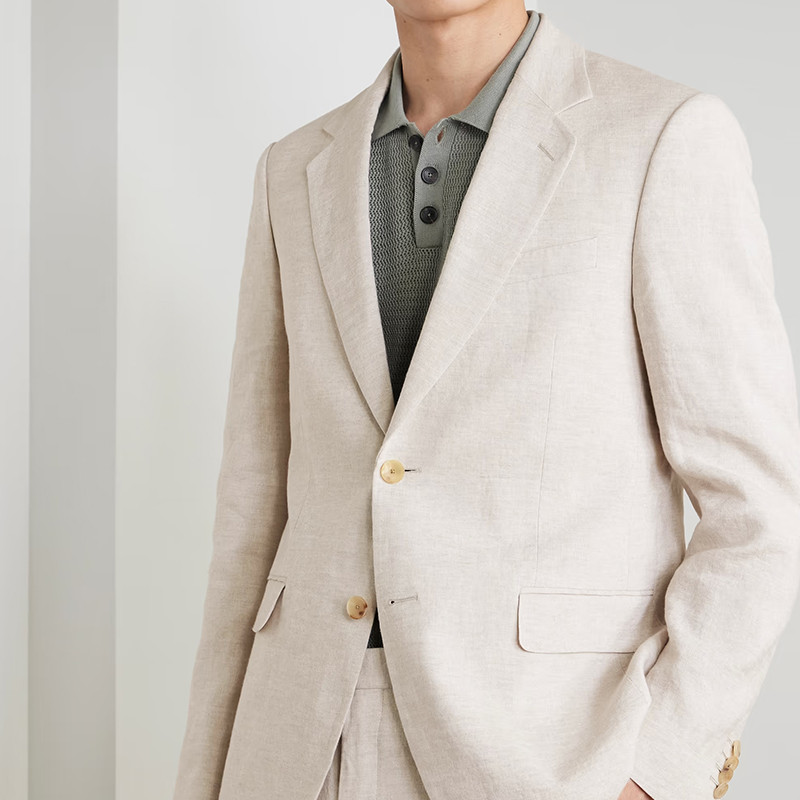
For many modern fashion brands, linen blazers are the stronger choice when the goal is a contemporary, breathable,
elevated, and naturally textured look. They are especially effective for spring/summer collections, resort-inspired tailoring,
minimalist brands, and labels that want a stronger sustainability story.
Cotton blazers still have value. They can feel more familiar, slightly easier for some consumers to maintain, and often work well
in all-season casual tailoring. But in terms of visual freshness, natural texture, and modern relaxed elegance, linen usually gives brands
a stronger design and storytelling advantage.
Linen and cotton communicate different things visually. Linen naturally shows texture, airiness, and relaxed refinement.
Cotton usually reads smoother, more uniform, and more conventional. Neither is inherently wrong—but they support very different visual identities.
One of linen’s biggest advantages is climate comfort. Linen blazers are typically more breathable and better aligned with warm-weather dressing.
For modern consumers who move between office, travel, and lifestyle settings, this comfort becomes part of the product’s value.
Fabric should match the customer your brand is trying to attract. Linen blazers tend to resonate with consumers who value natural fibers,
relaxed luxury, resort elegance, sustainability, and modern lifestyle dressing. Cotton blazers often appeal to customers who want something easier,
more familiar, and slightly closer to classic casual tailoring.
Linen blazers are especially strong in spring/summer and transitional collections. They work well in resort wear, vacation capsules,
modern office dressing, and occasionwear that needs a softer structure. Cotton blazers may offer broader year-round flexibility,
but they often do not create the same seasonal excitement or natural-fabric differentiation.
From a manufacturing perspective, linen and cotton both require technical control, but they behave differently. Linen needs thoughtful finishing,
shrinkage management, and construction planning to keep the blazer clean and balanced in bulk. Cotton may be more familiar in some factories,
but that does not automatically make it better for brand value.
Modern consumers increasingly respond to materials that feel more natural, breathable, and visibly honest. Linen often has a stronger sustainability
perception than cotton in fashion storytelling because it aligns well with low-impact, premium-natural, and conscious-lifestyle positioning.
Even when a consumer does not know the technical details, linen “looks” more aligned with modern responsible dressing.
Linen blazers are the better choice when your brand wants to feel current, breathable, premium, and naturally expressive.
They are especially effective for labels selling relaxed tailoring, sustainable wardrobe pieces, travel collections, and smart casual dressing for warmer climates.
Cotton blazers are still useful when the brand’s direction is more traditional, everyday, or utility-based. They may also work when the target customer
wants a blazer that feels more familiar and visually smoother. For some all-season casual collections, cotton can be a practical option.
As Linen Clothing Manufacturers,
we help brands develop linen blazer programs that balance modern styling with repeatable bulk standards.
Our approach focuses on fabric planning, fit balance, finish control, and consistent workmanship so linen blazers feel refined,
wearable, and commercially strong for modern collections.
Build a blazer range that feels breathable, modern, and differentiated while staying compatible with your wider linen collection.
Share your target market, blazer structure preference, fabric direction, seasonal plan, and collection concept.
We will help map a practical sampling and development workflow.
For many modern fashion brands, yes. Linen blazers usually feel more contemporary, more breathable, and more visually distinctive
because of their natural texture and relaxed-elevated appearance.
Absolutely. Linen blazers are excellent for business casual, especially when paired with clean shirting and tailored bottoms.
They offer a polished but less rigid alternative to heavier blazer fabrics.
Cotton blazers can feel more familiar to some customers, but linen blazers often offer stronger brand differentiation,
especially for spring/summer, resort, and modern lifestyle collections.
Linen usually supports a stronger sustainability perception and a more natural premium story, which is why many modern responsible-fashion brands
prefer linen over cotton for statement tailoring pieces.
Yes. Linen blazers integrate very naturally into a broader collection with
Custom Linen Shirts,
Linen Clothing Dresses,
and soft lifestyle pieces like Custom Linen Loungewear.
Linen Blazers vs Cotton Blazers: Which Is Better for Modern Fashion Brands?
Why Fabric Choice Matters for Modern Fashion Brands
What the fabric decision affects
Quick Answer: Is Linen or Cotton Better?
Simple decision rule
Aesthetic Difference: How Linen and Cotton Blazers Look on the Rack
How linen blazers read visually
How cotton blazers read visually
Comfort and Climate Performance
Linen blazer comfort advantages
Brand Positioning: Which Fabric Matches Your Customer?
Linen blazers are best for brands targeting
Cotton blazers are often better for
Seasonality and Collection Planning
Why linen works so well in seasonal planning
Construction, Tailoring, and Bulk Production Considerations
Linen blazer production considerations
Cotton blazer production considerations
Sustainability Story and Material Perception
Why linen usually wins in modern brand storytelling
Linen Blazers vs Cotton Blazers: Side-by-Side Comparison
Factor
Linen Blazers
Cotton Blazers
Visual identity
Textured, modern, natural, elevated
Smoother, more traditional, more familiar
Climate comfort
Excellent for warm weather and breathable layering
Good, but often less airy than linen
Brand differentiation
Stronger for modern and premium natural-fiber brands
Can feel more mainstream and less distinctive
Seasonality
Especially strong for spring/summer and resort capsules
Works across casual all-season collections
Sustainability perception
Usually stronger in customer perception
More neutral unless supported by strong sourcing story
Styling direction
Relaxed tailoring, minimalist, resort, modern office
Classic smart casual, everyday casual tailoring
Collection synergy
Pairs naturally with linen shirts, dresses, and lounge pieces
Pairs broadly, but with less material-story cohesion
When Modern Brands Should Choose Linen Blazers
Choose linen blazers if your brand wants to emphasize
When Cotton Blazers Still Make Sense
Cotton blazers may be the better option when
How We Support Linen Blazer Development at Linenwind
What brands typically value in our linen blazer workflow
Explore the category
Start your OEM/ODM project
FAQs
Are linen blazers more fashionable than cotton blazers?
Do linen blazers work for business casual collections?
Are cotton blazers easier to sell than linen blazers?
Which fabric is better for sustainable fashion brands?
Can linen blazers be part of a full coordinated collection?