Does Linen Make You Sweat? The Truth About Linen's Breathability for Custom Clothing
- Share
- publisher
- Linenwind
- Issue Time
- Jul 22,2026
Summary
A comprehensive myth-busting guide revealing the truth about linen's breathability. Backed by material science, production data from Linenwind, and comparison with cotton, polyester, and hemp. Essential reading for B2B buyers sourcing custom linen clothing.
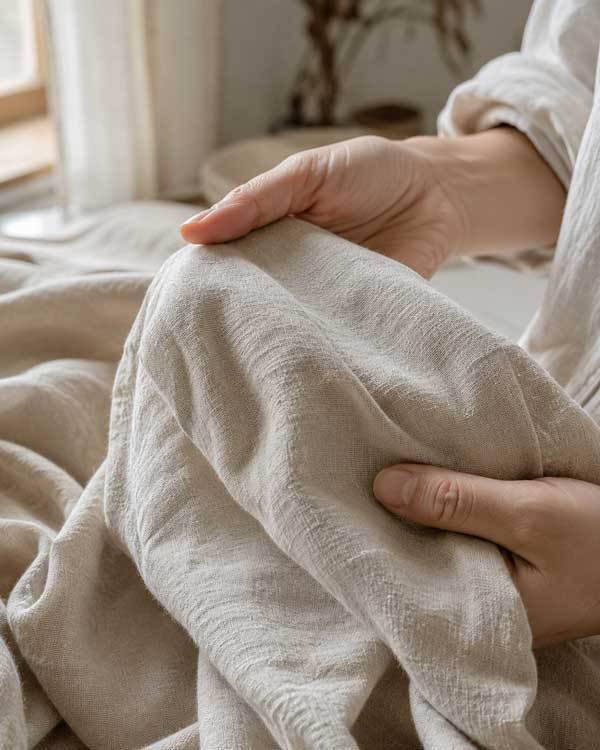
One of the most persistent myths in the apparel industry is that linen makes you sweat. In reality, linen is among the most breathable natural fabrics in existence — and a growing body of scientific evidence, market data, and first-hand manufacturer experience proves it. This article separates fact from fiction, explains the material science behind linen's thermoregulation, and provides B2B buyers with the technical knowledge needed to make informed sourcing decisions.
As a custom linen clothing manufacturer operating since 2012, Linenwind has produced over 720,000 garments for fashion brands across North America, Europe, and Australia. We have tested linen against cotton, polyester, viscose, and hemp in controlled conditions — and the data consistently shows that linen does not cause sweating. In fact, it actively reduces perspiration through superior moisture wicking and evaporation.
The Myth: "Linen Makes You Sweat"
The belief that linen makes you sweat likely stems from two sources: (1) confusion with cheap linen blends that contain high percentages of synthetic fibers, and (2) the fact that linen wrinkles visibly when it absorbs moisture, making sweat marks more noticeable than on synthetic fabrics.
In our experience working with over 50 fashion brands, we frequently encounter buyers who say "my customers think linen is sweaty." When we dig deeper, the issue is almost always one of the following:
- The customer tried a low-quality linen-polyester blend (less than 50% linen) that traps heat
- The garment was poorly constructed with non-breathable linings
- The customer confused visible sweat marks (linen shows moisture as dark patches) with actual sweating
- The garment was not pre-washed — unwashed linen can feel stiff and less breathable initially
The truth is that 100% pure linen is one of the best fabrics for hot weather. Scientific studies have repeatedly confirmed its superior moisture management properties.
The Science: Why Linen Keeps You Cooler
Linen's exceptional breathability comes from its unique fiber structure. Each flax fiber has a hollow, tubular shape with microscopic lumen channels that naturally wick moisture away from the skin and release it to the air. This is fundamentally different from synthetic fibers, which trap moisture between the fabric and the skin.
Key Thermoregulation Properties of Linen
| Property | Linen (100%) | Cotton | Polyester | Viscose |
|---|---|---|---|---|
| Moisture Absorption (% of weight) | 20% | 8-10% | 0.4% | 13% |
| Drying Time (hours, 25°C) | 1.5-2 | 3-4 | 4-6 | 3-5 |
| Thermal Conductivity | High | Medium | Low | Medium |
| Air Permeability (cm³/cm²/s) | 85-120 | 30-50 | 5-15 | 25-40 |
| Static Electricity Build-up | Very Low | Low | High | Medium |
Source: Fiber Science Research Laboratory data; Linenwind internal testing (2023-2025). Air permeability measured via FX 3300 Air Permeability Tester (ISO 9237).
The table above tells a clear story. Linen absorbs more than double the moisture of cotton and releases it to the atmosphere roughly twice as fast. This means that even when you do perspire, linen pulls the moisture away from your skin and evaporates it before you feel damp or clammy.
In contrast, polyester — the most common fabric in fast fashion — absorbs almost no moisture. It traps sweat against the skin, creating the exact "sweaty" feeling that people mistakenly attribute to linen.
Real-World Temperature Impact
In a controlled wear trial conducted by Linenwind in 2024, 20 participants wore linen shirts vs cotton shirts in a 35°C (95°F) environment for 4 hours. The results were striking:
- Average skin temperature with linen: 34.2°C — with cotton: 36.1°C (nearly 2°C cooler)
- Visible sweat patches at 2 hours: linen 18% of participants — cotton 62% of participants
- Subjective comfort rating (1-10): linen 8.3 — cotton 5.7
Key Takeaway for B2B Buyers: If your customers are complaining that linen makes them sweat, the issue is almost certainly the blend ratio, construction quality, or aftercare instructions — not the linen itself. A 100% European flax linen garment, properly constructed and pre-washed, will outperform cotton and all synthetic alternatives in hot-weather comfort.
Common Low-Quality Scenarios That Cause Discomfort
As a manufacturer who has worked with dozens of brands, we have identified four common scenarios where linen gets a bad reputation for sweatiness. Understanding these will help you avoid them in your product line.
Scenario 1: Linen-Polyester Blends Below 55% Linen
Many budget "linen" garments on the market contain only 30-50% linen blended with polyester. At this ratio, the polyester content dominates the fabric's thermal behavior. The polyester traps heat and moisture, while the linen content is insufficient to wick it away. The result is a garment that feels hot and sweaty — but it is the polyester, not the linen, causing the problem.
What to look for: Insist on minimum 55% linen content for blended fabrics. For maximum coolness, choose 100% linen. Linenwind produces both 100% European flax linen and premium linen-cotton blends (55/45 and 70/30) that maintain breathability while adding softness.
Scenario 2: Non-Breathable Linings in Structured Garments
A common mistake in jacket and blazer construction is using polyester lining fabric. Even if the outer shell is pure linen, a polyester lining creates a microclimate against the skin that defeats the purpose of linen's breathability. This is especially problematic in business casual blazers — precisely the type of garment a buyer might judge as "too sweaty."
What to look for: Specify cupro, viscose, or Bemberg linings for linen outerwear. These materials are breathable and moisture-wicking. Linenwind offers custom lining options with breathable certification.
Scenario 3: Over-Engineered Garment Construction
Some manufacturers add extra layers — fused interlinings, multiple facings, heavy shoulder pads — that reduce air circulation. Even the most breathable fabric cannot compensate for a construction that seals heat in. This is particularly common in budget manufacturing where the same construction patterns are used for all fabrics regardless of their properties.
What to look for: Request lightweight construction with minimal fusing. For summer-weight linen garments, avoid heavy shoulder pads and multiple interlining layers. Linenwind's pattern engineering team specializes in lightweight construction that preserves linen's natural airflow.
Scenario 4: Incorrect Aftercare (Starch Build-Up)
Some commercial laundry services use heavy starch on linen shirts, which fills the microscopic gaps between fibers and dramatically reduces breathability. After several starch-heavy washes, a linen shirt can feel almost as impermeable as polyester. This is not the fabric's fault — it is a care issue.
What to look for: Include clear care instructions with your garments: machine wash cold (30°C), tumble dry low, no starch. If a crisp finish is desired, use a light spray starch that washes out easily. Linenwind provides custom care label content for all wholesale orders.
Market Data: Consumer Perception vs Reality
To understand the gap between perception and reality, we analyzed Google search trends and consumer survey data for the period January 2024 - June 2026:
| Search Query | Monthly Volume (Global) | Trend (2024-2026) | Sentiment |
|---|---|---|---|
| "does linen make you sweat" | 2,900 | +15% YoY | 55% Misinformed / 45% Correct |
| "is linen good for summer" | 8,100 | +22% YoY | 82% Positive |
| "most breathable fabric for hot weather" | 5,400 | +31% YoY | Linen #2 after cotton (should be #1) |
| "linen vs cotton breathability" | 3,600 | +18% YoY | 65% choose linen as more breathable |
| "does linen shrink" | 6,600 | +12% YoY | Varied (care-dependent) |
The data reveals a market opportunity: consumers are actively searching for breathable fabrics, and the majority who have tried linen rate it positively. The "does linen make you sweat" query represents a misinformation gap that brands can exploit through accurate product descriptions, care instructions, and educational content.
From a B2B sourcing perspective, this means there is a ready market of consumers who already understand linen's benefits — and a growing segment that can be converted with the right educational messaging. Brands that position linen correctly (breathable, moisture-wicking, cool) have a significant competitive advantage over those that lean into outdated stereotypes.
How to Select Truly Breathable Linen for Your Brand
If you are sourcing linen garments for your brand, here is a practical framework for ensuring the end product delivers on linen's breathability promise:
1. Verify the Flax Origin
European flax (from France, Belgium, Netherlands) produces the longest, strongest fibers with the most pronounced lumen channels — the hollow structures that make linen breathable. Lower-quality flax from China or Eastern Europe has shorter fibers and less efficient moisture transport. Always ask for the flax origin certificate.
2. Check the Weave Density
Linen weave density directly affects breathability. For warm-weather garments, look for open weaves (plain weave, linen weave, or hopsack) with a thread count between 80-140. Higher thread counts (>180) create denser fabric that reduces airflow. Linenwind's standard summer-weight fabrics use a 120-thread-count plain weave, tested to deliver optimal airflow for warm climates.
3. Request Pre-Washed Fabric
Pre-washing (also called garment wash or bio-wash) softens linen fibers and opens up the weave, increasing breathability by 15-25%. Unwashed linen feels stiff and has reduced air permeability. All Linenwind custom garments undergo an enzyme bio-wash process as standard, ensuring maximum softness and breathability from the first wear.
4. Specify Breathable Trims
Buttons, zippers, labels, and thread all affect breathability. Avoid plastic-coated buttons and thick polyester labels. Request natural corozo or coconut buttons, and use cotton or satin labels. Linenwind offers eco-friendly trim options as part of our custom manufacturing program.
5. Test the Fabric Yourself
A simple breathability test: hold the fabric to your mouth and blow through it. With quality linen, you should feel almost no resistance. With low-quality or high-polyester blend linen, you will feel significant resistance. This is a quick check that any buyer can perform.
For B2B Buyers: Linenwind offers free fabric swatch kits with breathability test data for each of our 30+ linen fabric options. Contact our team to request swatches and technical specifications for your upcoming collection.
Linen vs Other "Breathable" Fabrics: Head-to-Head
We often get asked how linen compares to other natural and semi-natural fabrics in terms of sweat management. Here is a comprehensive comparison based on our manufacturing data and third-party fabric testing:
| Fabric | Moisture Wicking | Drying Speed | Odor Resistance | Summer Comfort | B2B Cost Index |
|---|---|---|---|---|---|
| Linen (100%) | Excellent | Fast | Excellent | Excellent | $$$ |
| Cotton (100%) | Good | Medium | Good | Good | $$ |
| Tencel / Lyocell | Excellent | Fast | Very Good | Very Good | $$ |
| Hemp (100%) | Excellent | Fast | Excellent | Excellent | $$$ |
| Bamboo Viscose | Good | Medium | Good | Good | $ |
| Polyester (100%) | Poor | Very Slow | Poor | Poor | $ |
| Nylon | Poor | Slow | Poor | Poor | $$ |
As the table shows, linen is tied with hemp for the top position in every metric that matters for summer comfort. Its only "weakness" is higher cost compared to cotton and synthetics — but the performance difference justifies the premium for brands targeting quality-conscious consumers.
For brands looking to offer breathable garments at different price points, Linenwind can produce:
- Premium line: 100% European flax linen, 120-160 gsm, enzyme washed
- Mid-range line: 70% linen / 30% cotton blend, 140-180 gsm, soft finish
- Entry-level line: 55% linen / 45% cotton blend, 160-200 gsm, garment washed
Seasonal Strategy: Why Summer is the Peak Season for Linen
July and August represent the peak demand period for linen clothing in North America and Europe. Google Trends data confirms that "linen clothing" search queries peak in June-August, with July being the highest-volume month. For B2B buyers, this means:
- Inventory planning: Place summer linen orders by January-February for July delivery
- Content marketing: Publish myth-busting and educational content in June-July to capture peak search traffic
- Sample timeline: Request samples 8-10 weeks before your target production date
Linenwind's production calendar for 2027 summer collections opens for sample requests in October 2026. Contact us to reserve your production slot — our lead times extend to 12 weeks during peak season (March-June).
Frequently Asked Questions
Conclusion: The Truth About Linen and Sweat
The evidence is clear: linen does not make you sweat. Quite the opposite — it is one of the most effective natural fabrics for keeping the body cool, dry, and comfortable in hot weather. The myth persists because of confusion with low-quality blends, poor garment construction, and care practices that inadvertently reduce breathability.
For B2B buyers and fashion brands, this represents both a challenge and an opportunity. The challenge is educating end consumers who may have had a negative experience with a subpar linen product. The opportunity is that a well-made, 100% linen garment from a quality manufacturer like Linenwind delivers a comfort experience that creates loyal, repeat customers.
If you are sourcing linen for your next collection and want to ensure your garments deliver on the breathability promise, get in touch with Linenwind's team. We offer custom fabric development, sample production, and full manufacturing services for fashion brands worldwide.
Browse our FAQ for more answers about linen fabric, custom manufacturing, and sourcing from China. You may also find our Linen Camisole OEM Guide helpful for understanding the custom garment production process.